


ube latte
Build this with a familiar base and a small measured pour of ube syrup. Keep the flavour easy to identify and taste the completed drink before it reaches the customer.


3/15-17 Charles Street, St Marys
Store Hours
Mon-Fri: 10:00am - 4:00pm
Sat: 10:00am - 2:00pm
Sun: Closed
Please wait for notification of pickup is ready
Get directionAustralia-Wide Delivery
Fast Direct Packaging · Crafted Barista 800 mL
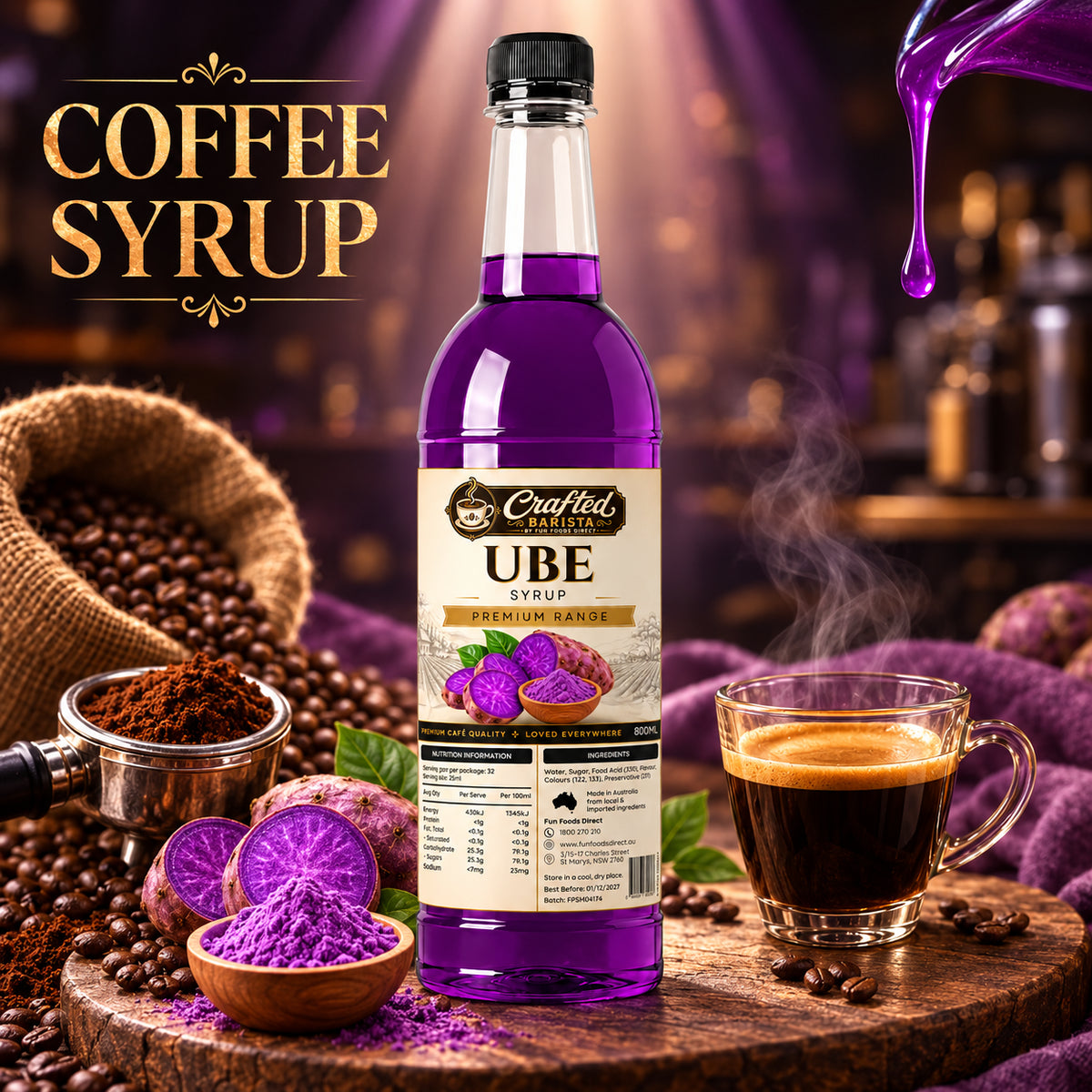
Bring sweet, creamy ube-style flavour with gentle earthy notes to your coffee station, cold-drink bar or dessert menu. This 800 mL bottle makes it easy to create a a distinctive dessert menu option without complicating the core service routine.
Choose the Ube listing above, review the pack details, and start with a small measured pour in your own recipe.
Flavour notes
The defining quality of this syrup is sweet, creamy ube-style flavour with gentle earthy notes. A customer ordering a ube drink should meet that flavour clearly, whether the serve is a latte, a cold beverage or a dessert-inspired shake. It suits an exploratory menu special, especially for customers who enjoy creamy, dessert-inspired drinks. The ingredient is a flavour syrup, so use the surrounding recipe to supply the coffee, milk, ice or dessert body that your menu promises.
Think about the other ingredients as supporting players. milk and vanilla, coconut, white chocolate, ice cream and soft desserts can each give ube a different setting. Pick one dominant base and one supporting note rather than adding every possible flavour to a single cup. This helps staff explain the drink, helps customers know what they are buying, and gives you a recipe that is easier to reproduce.
Ube is most effective when guests understand that the drink is dessert-inspired. A milk-led version can show its sweet, gently earthy flavour without the espresso competing for attention; a separate ube latte can introduce coffee deliberately. Coconut and vanilla are natural directions to test, but use one supporting note at a time. For a dessert, a small pour can accent ice cream or cheesecake. Do not describe the syrup as fresh ube, purple-yam purée or a source of a particular colour without checking the current product. The bottle supplies flavour, while the base supplies the drink texture.
At-a-glance menu map
Build this with a familiar base and a small measured pour of ube syrup. Keep the flavour easy to identify and taste the completed drink before it reaches the customer.
For a chilled version, stir the syrup into the liquid before filling the cup with more ice. This helps the ube note feel even from first sip to last.
On a busy menu, define the milk, coffee or non-coffee base clearly. A named ube drink should deliver the promised flavour without requiring a complex list of other syrups.
Consider the garnish only after the recipe is balanced. A restrained finish makes the ube character clear and keeps preparation repeatable.
Use ube as a clear menu cue, not just an extra sweetener. The ube latte may be your most recognisable option, while iced ube milk drink can reach a different customer at a different time of day. If your menu includes ube frappe, define the base, ice and topping as well as the syrup so the flavour stays consistent.
Dessert options can extend the use of the bottle without requiring a new drink station. Try vanilla ice cream, coconut dessert cups, cheesecake as starting points. Add a small amount and taste the complete plate. A beverage syrup is a finishing accent; it has a different role from a thick sauce, fruit purée or a baked filling.
This Crafted Barista syrup is described as made in Australia from local and imported ingredients and intended for hot and cold beverages. Keep the 800 mL bottle near the relevant drink station, away from preventable mess and in line with its label directions. If you use a dispensing accessory, confirm compatibility and whether it is sold separately before setting up the station.
Measure your first trial, note the cup size, base ingredients and finish, then give staff one written build. Keep a smaller tasting sample when trialling a new flavour. This simple process makes the ube drink easier to price, teach and serve, especially when several syrups are available on the same counter.
Recipe development
These are serving ideas, not manufacturer dosage instructions. Work from a small measured pour, follow the current bottle label and adapt to your own cup, machine and menu.
Mix a little syrup with the milk component, then add espresso if that is the menu version. Taste the finished drink so the ube note remains clear.
Record the espresso and milk quantities for this ube drink alongside the syrup pour. A consistent hot serve makes it easier for staff to reproduce the same balance during busy periods.
Build with chilled milk and ice, stir in syrup and serve promptly. A simple presentation helps the unusual flavour speak for itself.
Test the chilled version in the actual takeaway cup. Ice and mixing affect the finished ube flavour, so taste the complete serve rather than judging the syrup before it is diluted.
Blend your base with a small pour of ube syrup and a coconut note. Keep the flavour combination deliberate rather than layering several competing syrups.
Write down the blender base, ice amount and finishing garnish for this ube idea. Check sweetness after blending, when the drink has reached its true serving texture.
Use syrup to accent vanilla ice cream or a cheesecake portion. The aim is a recognisable ube-style finish, not a substitute for an ube filling.
Serve a small test portion and ask whether the ube note complements the dessert. A measured accent can be more useful than covering the whole plate with syrup.
Ube brings a different dessert profile from vanilla or white chocolate. Present it as ube-style syrup, not as fresh purple yam or a purée.
A menu description can name the main base, the ube flavour and one useful finishing detail. For example, a customer should be able to distinguish the ube latte from the ube frappe at a glance. Keep the text clear about whether a drink contains coffee, dairy or other ingredients according to your actual recipe; the syrup's flavour name alone cannot establish dietary suitability.
This syrup contributes flavour and sweetness. Before increasing the pour, ask whether the base drink already contains sweetened milk, ice cream, chocolate, lemonade or another syrup. Taste after mixing, because a spoonful of syrup alone does not represent the finished drink. This is particularly relevant to ube frappe or a dessert plate, where toppings can change the perceived balance.
For iced service, ice and time can dilute a drink. Start from a repeatable build, stir well and check it immediately before service. If you sell several cup sizes, record a separate recipe for each rather than assuming that one free pour will scale cleanly.
Each pairing suggests a different role for ube syrup. Use the coffee pairing when the customer wants a flavoured café drink; use the dessert pairing when sweetness is the attraction. A short test panel with staff can reveal which version reads most clearly on the menu before it becomes a permanent item.
The selected product is a single 800 mL Ube Syrup Premium Range listing. Review the current product image, ingredient statement, allergens, best-before details and storage instructions if those details matter for your kitchen or your customers. Do not infer that a flavour syrup is sugar-free, vegan, dairy-free or nut-free from its name or from a suggested recipe. The current label is the right source for those facts.
Plan a small menu trial with ube latte, iced ube milk drink and one of the desserts above. Compare which one communicates ube most naturally. Record the result before ordering for a full menu rollout, and keep the recipe and labelling clear for staff. That approach helps the bottle earn its place on the counter rather than becoming a one-off flavour with no defined use.
For a clear ube launch, write two short menu descriptions before you test: one for ube latte and another for iced ube milk drink. Ask whether a customer can picture the difference without seeing a long ingredient list. Then prepare both using the real cup, ice and serving method. If the flavour reads differently in those two settings, adjust the recipes independently. A small, specific test gives you a better purchase decision than assuming the same pour suits every use.
Questions customers ask
It is the Crafted Barista 800 mL flavour syrup listed here. Use it to add a sweet, creamy ube-style flavour with gentle earthy notes to suitable drinks or desserts. Select this product only when Ube is the flavour you intend to buy; the other flavours in the Coffee Syrups collection have their own listings.
The listing does not specify a universal dose. Start with a small measured pour, taste the completed drink and adjust for cup size, ice, milk, coffee strength and other sweet ingredients. Record the amount that works in your own recipe so your team can repeat it consistently.
Yes. The original product listing presents the syrup for hot and cold beverages. Stir it thoroughly into the drink, then taste at the temperature you will actually serve. A flavour that seems strong in a hot drink can feel different once chilled over ice.
Yes, this product is listed as an 800 mL bottle. Check the product title, image and current pack at checkout. A pump or other accessory is not included unless it is explicitly shown as part of the selected product offer.
Ube is often described as sweet and gently earthy with a creamy dessert impression. This syrup is an ube-style flavour, so taste it in your intended milk or dessert base.
No. The listing is for an 800 mL ube flavour syrup, not a purple-yam purée. It adds flavour rather than the body or fibre of a purée.
The listing suggests dessert use. Try a small amount with vanilla ice cream, coconut dessert cups, cheesecake, and taste the finished plate. Syrup can add flavour, but it should not automatically be treated as a thick sauce or a substitute for a dessert topping with another texture.
Follow the current bottle label for unopened and after-opening storage and best-before guidance. Keep the pour area clean, close the bottle as directed and use clean equipment. If a customer's diet or allergy status matters, check the ingredient and allergen statement on the actual pack.
Order the 800 mL Ube syrup above when this is the flavour your team needs. For another café flavour, browse the Coffee Syrups collection and compare each product by its own listing and pack details.