


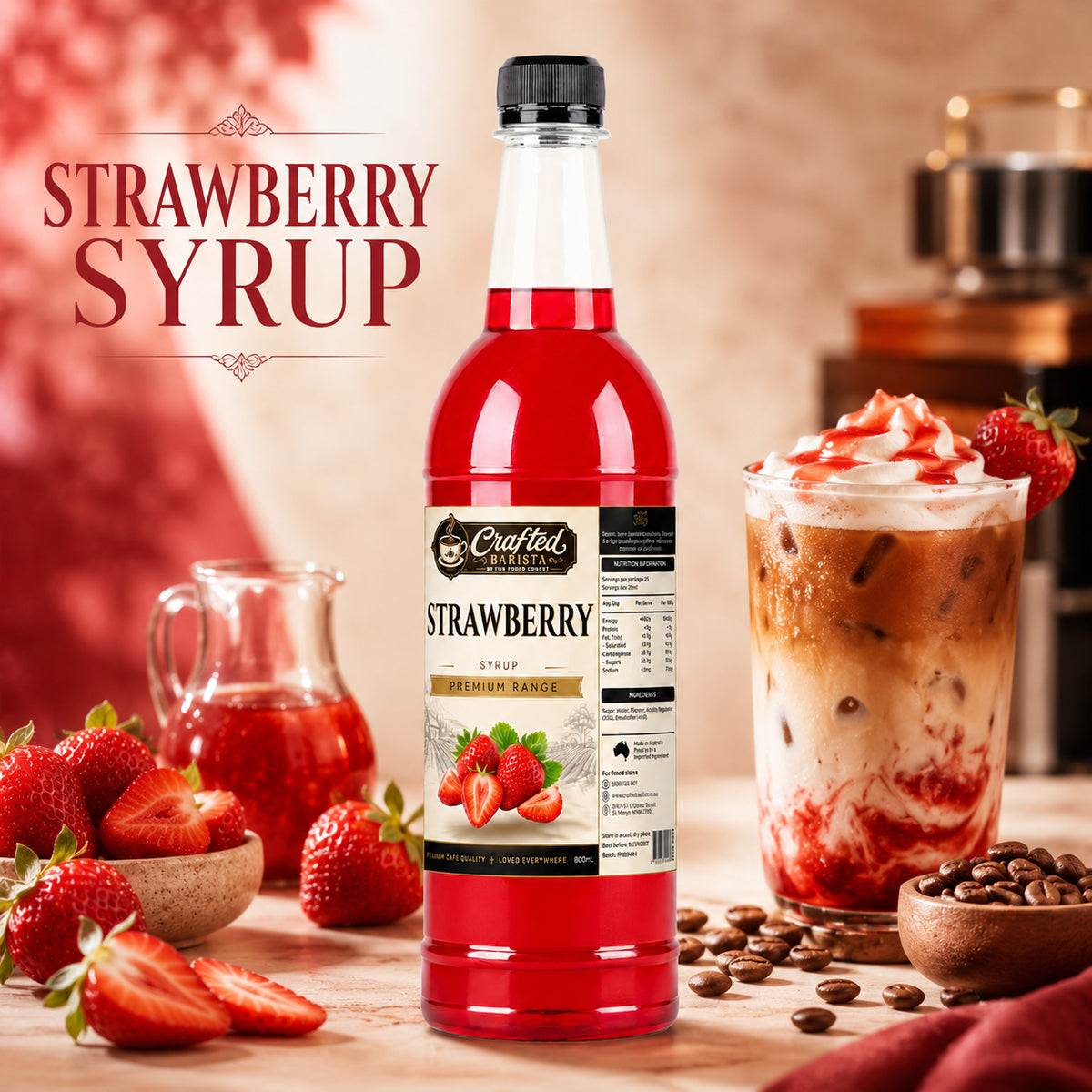
strawberry milkshake
Build this with a familiar base and a small measured pour of strawberry syrup. Keep the flavour easy to identify and taste the completed drink before it reaches the customer.


3/15-17 Charles Street, St Marys
Store Hours
Mon-Fri: 10:00am - 4:00pm
Sat: 10:00am - 2:00pm
Sun: Closed
Please wait for notification of pickup is ready
Get directionAustralia-Wide Delivery
Fast Direct Packaging · Crafted Barista 800 mL
Bring bright, sweet strawberry flavour with a fruit-forward finish to your coffee station, cold-drink bar or dessert menu. This 800 mL bottle makes it easy to create a colourful summer drinks option without complicating the core service routine.
Choose the Strawberry listing above, review the pack details, and start with a small measured pour in your own recipe.
Flavour notes
The defining quality of this syrup is bright, sweet strawberry flavour with a fruit-forward finish. A customer ordering a strawberry drink should meet that flavour clearly, whether the serve is a latte, a cold beverage or a dessert-inspired shake. Its most natural place is a summer beverage board or dessert counter, where customers can see immediately how the strawberry note will be used. The ingredient is a flavour syrup, so use the surrounding recipe to supply the coffee, milk, ice or dessert body that your menu promises.
Think about the other ingredients as supporting players. milk and vanilla, lemonade and sparkling water, white chocolate, berries and light desserts can each give strawberry a different setting. Pick one dominant base and one supporting note rather than adding every possible flavour to a single cup. This helps staff explain the drink, helps customers know what they are buying, and gives you a recipe that is easier to reproduce.
Strawberry can make a cold drinks board easier to browse because the flavour is familiar before the customer reads the recipe. Try a lemonade for a refreshing option, a milkshake for a creamy one and a frozen-yoghurt plate for dessert. Those three uses should not have identical syrup amounts: lemonade has its own acidity, while ice cream and yoghurt already bring sweetness and body. The strawberry note can also work with white chocolate, but keep that a clearly named special rather than obscuring the fruit. In a café, this bottle can give non-coffee guests a deliberate choice.
At-a-glance menu map
Build this with a familiar base and a small measured pour of strawberry syrup. Keep the flavour easy to identify and taste the completed drink before it reaches the customer.
For a chilled version, stir the syrup into the liquid before filling the cup with more ice. This helps the strawberry note feel even from first sip to last.
On a busy menu, define the milk, coffee or non-coffee base clearly. A named strawberry drink should deliver the promised flavour without requiring a complex list of other syrups.
Consider the garnish only after the recipe is balanced. A restrained finish makes the strawberry character clear and keeps preparation repeatable.
Use strawberry as a clear menu cue, not just an extra sweetener. The strawberry milkshake may be your most recognisable option, while strawberry iced tea can reach a different customer at a different time of day. If your menu includes strawberry lemonade, define the base, ice and topping as well as the syrup so the flavour stays consistent.
Dessert options can extend the use of the bottle without requiring a new drink station. Try cheesecake and berries, frozen yoghurt, pavlova with fruit as starting points. Add a small amount and taste the complete plate. A beverage syrup is a finishing accent; it has a different role from a thick sauce, fruit purée or a baked filling.
This Crafted Barista syrup is described as made in Australia from local and imported ingredients and intended for hot and cold beverages. Keep the 800 mL bottle near the relevant drink station, away from preventable mess and in line with its label directions. If you use a dispensing accessory, confirm compatibility and whether it is sold separately before setting up the station.
Measure your first trial, note the cup size, base ingredients and finish, then give staff one written build. Keep a smaller tasting sample when trialling a new flavour. This simple process makes the strawberry drink easier to price, teach and serve, especially when several syrups are available on the same counter.
Recipe development
These are serving ideas, not manufacturer dosage instructions. Work from a small measured pour, follow the current bottle label and adapt to your own cup, machine and menu.
Blend milk, ice cream and a little syrup, then taste before serving. The fruit note should be obvious without making the shake cloying.
Record the espresso and milk quantities for this strawberry drink alongside the syrup pour. A consistent hot serve makes it easier for staff to reproduce the same balance during busy periods.
Stir a small pour into chilled lemonade and ice. Finish with a fruit garnish if your menu calls for it, keeping the drink fresh and easy to identify.
Test the chilled version in the actual takeaway cup. Ice and mixing affect the finished strawberry flavour, so taste the complete serve rather than judging the syrup before it is diluted.
Combine brewed and cooled tea with ice and syrup. Start light, because tea can be overwhelmed when several sweet fruit ingredients are added at once.
Write down the blender base, ice amount and finishing garnish for this strawberry idea. Check sweetness after blending, when the drink has reached its true serving texture.
Layer a modest amount of syrup with frozen yoghurt and berries. Keep the syrup as an accent so the dessert still has texture and contrast.
Serve a small test portion and ask whether the strawberry note complements the dessert. A measured accent can be more useful than covering the whole plate with syrup.
This is a fruit-led syrup rather than a default espresso flavour. Choose it for cold drinks, shakes and dessert menus when a clear strawberry identity matters.
A menu description can name the main base, the strawberry flavour and one useful finishing detail. For example, a customer should be able to distinguish the strawberry milkshake from the strawberry lemonade at a glance. Keep the text clear about whether a drink contains coffee, dairy or other ingredients according to your actual recipe; the syrup's flavour name alone cannot establish dietary suitability.
This syrup contributes flavour and sweetness. Before increasing the pour, ask whether the base drink already contains sweetened milk, ice cream, chocolate, lemonade or another syrup. Taste after mixing, because a spoonful of syrup alone does not represent the finished drink. This is particularly relevant to strawberry lemonade or a dessert plate, where toppings can change the perceived balance.
For iced service, ice and time can dilute a drink. Start from a repeatable build, stir well and check it immediately before service. If you sell several cup sizes, record a separate recipe for each rather than assuming that one free pour will scale cleanly.
Each pairing suggests a different role for strawberry syrup. Use the coffee pairing when the customer wants a flavoured café drink; use the dessert pairing when sweetness is the attraction. A short test panel with staff can reveal which version reads most clearly on the menu before it becomes a permanent item.
The selected product is a single 800 mL Strawberry Syrup Premium Range listing. Review the current product image, ingredient statement, allergens, best-before details and storage instructions if those details matter for your kitchen or your customers. Do not infer that a flavour syrup is sugar-free, vegan, dairy-free or nut-free from its name or from a suggested recipe. The current label is the right source for those facts.
Plan a small menu trial with strawberry milkshake, strawberry iced tea and one of the desserts above. Compare which one communicates strawberry most naturally. Record the result before ordering for a full menu rollout, and keep the recipe and labelling clear for staff. That approach helps the bottle earn its place on the counter rather than becoming a one-off flavour with no defined use.
For a clear strawberry launch, write two short menu descriptions before you test: one for strawberry milkshake and another for strawberry iced tea. Ask whether a customer can picture the difference without seeing a long ingredient list. Then prepare both using the real cup, ice and serving method. If the flavour reads differently in those two settings, adjust the recipes independently. A small, specific test gives you a better purchase decision than assuming the same pour suits every use.
Questions customers ask
It is the Crafted Barista 800 mL flavour syrup listed here. Use it to add a bright, sweet strawberry flavour with a fruit-forward finish to suitable drinks or desserts. Select this product only when Strawberry is the flavour you intend to buy; the other flavours in the Coffee Syrups collection have their own listings.
The listing does not specify a universal dose. Start with a small measured pour, taste the completed drink and adjust for cup size, ice, milk, coffee strength and other sweet ingredients. Record the amount that works in your own recipe so your team can repeat it consistently.
Yes. The original product listing presents the syrup for hot and cold beverages. Stir it thoroughly into the drink, then taste at the temperature you will actually serve. A flavour that seems strong in a hot drink can feel different once chilled over ice.
Yes, this product is listed as an 800 mL bottle. Check the product title, image and current pack at checkout. A pump or other accessory is not included unless it is explicitly shown as part of the selected product offer.
No. Strawberry syrup is useful in chilled milk drinks, lemonade, iced tea and desserts as well as any coffee recipe you specifically develop. The fruit note is a natural lead for non-coffee options.
Yes. Start with a small pour in chilled lemonade, stir, and taste before increasing it. The lemonade should still provide a refreshing citrus contrast.
The listing suggests dessert use. Try a small amount with cheesecake and berries, frozen yoghurt, pavlova with fruit, and taste the finished plate. Syrup can add flavour, but it should not automatically be treated as a thick sauce or a substitute for a dessert topping with another texture.
Follow the current bottle label for unopened and after-opening storage and best-before guidance. Keep the pour area clean, close the bottle as directed and use clean equipment. If a customer's diet or allergy status matters, check the ingredient and allergen statement on the actual pack.
Order the 800 mL Strawberry syrup above when this is the flavour your team needs. For another café flavour, browse the Coffee Syrups collection and compare each product by its own listing and pack details.