


Cocktails, mocktails & frozen drinks
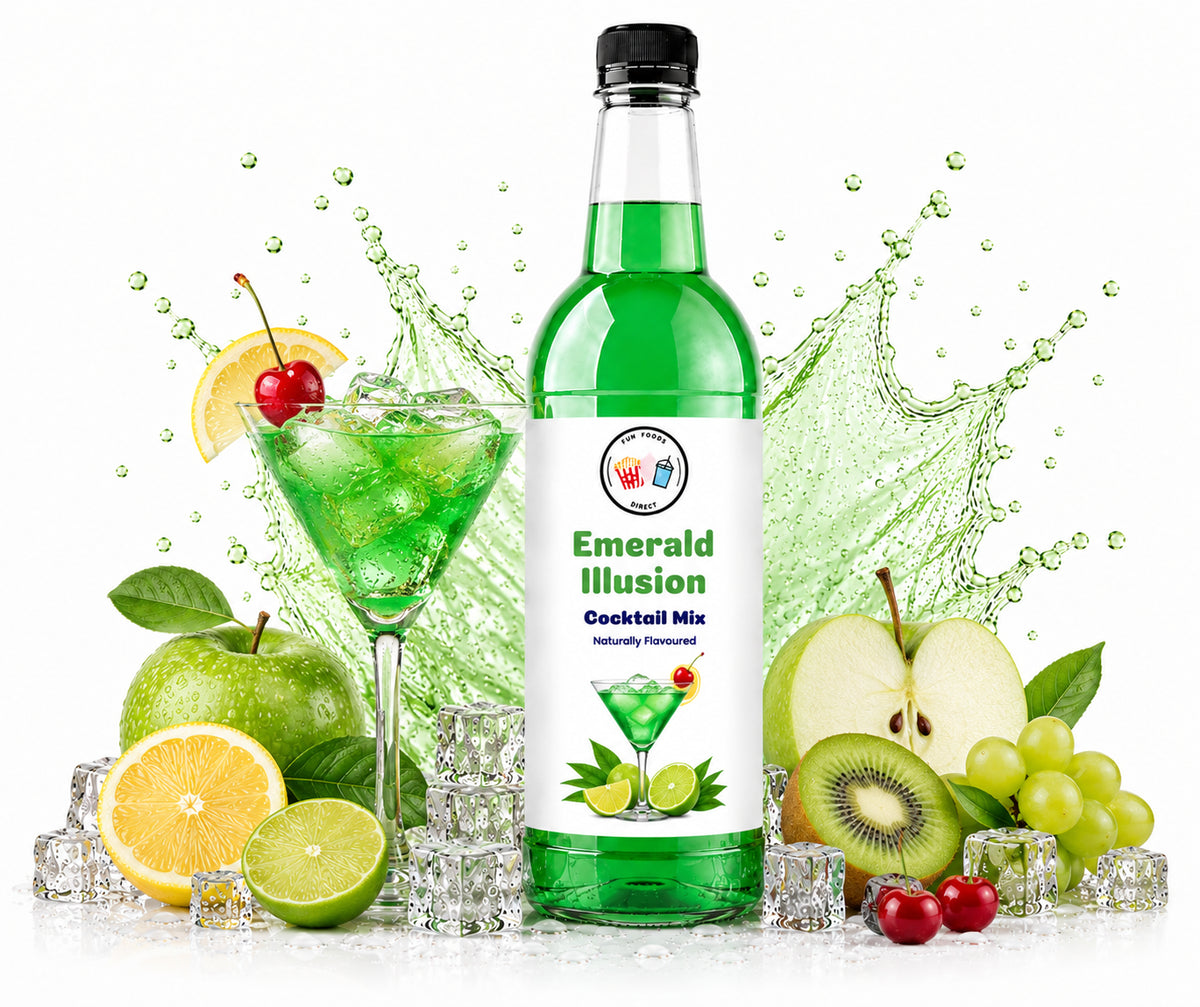
Emerald Illusion Premium Cocktail Mix
Build a refreshing drink with Emerald Illusion, an 800 mL flavoured syrup base made for mixing. The chilled cocktail combines the syrup with vodka, soda water and ice; leave out the vodka for a simple mocktail. You can also blend the ingredients into a frozen drink or experiment with an ice cream milkshake. One bottle gives you room to serve a few glasses, plan a party menu or create a measured recipe for a café or bar.
Ingredients
Water, Sugar, Dextrose, Food Acid (330), Flavours, Colour (123), Preservative (211).
These are the ingredients in the bottled syrup. Vodka, soda water, ice, ice cream and any garnish are added separately when you make a drink.
Chilled cocktail recipe
- 30 mL Emerald Illusion syrup base
- 30 mL vodka
- 120 mL soda water
- A handful of ice
Fill a glass with ice, add the syrup, vodka and soda water, then stir gently and serve. For a mocktail, prepare the same drink without the vodka.
Nutrition per 25 mL of syrup
An 800 mL bottle contains 32 nutrition servings of 25 mL. The chilled cocktail recipe above uses 30 mL of syrup per glass, so its recipe measure differs from the nutrition serving.
- Energy
- 402 kJ
- Protein
- <1 g
- Total fat
- 0 g
- Saturated fat
- 0 g
- Carbohydrate
- 22.3 g
- Sugars
- 22.3 g
- Sodium
- 12 mg
These figures cover the syrup portion only. A prepared drink also contains whatever you add to it.
A flexible syrup base for drinks menus
Emerald Illusion makes a straightforward starting point when you want the same base to work in several ways. Measure the syrup, choose the rest of the drink, and finish it in the glass or blender. You can serve the chilled vodka and soda recipe at a gathering, offer a non-alcoholic version alongside it, or test a frozen presentation when the weather calls for a colder option. The syrup is a concentrate to mix into a drink, so it is useful to decide on the complete recipe before writing a menu description or planning quantities.
For hospitality service, a repeatable pour is often more valuable than a complicated list of optional extras. A standard measure helps staff make the drink the same way each time and helps you estimate how many bottles to order. Home hosts can use that same approach: set out a measure, the chosen mixer, plenty of ice and a simple recipe card. Guests can then see whether the drink contains vodka or has been made without it.
Make the chilled vodka cocktail
Start with a glass that has enough room for the measured liquids and ice. Add a handful of ice, pour in 30 mL of Emerald Illusion syrup base and 30 mL of vodka, then add 120 mL of soda water. Stir gently until combined. The recipe contains 180 mL of measured liquid before ice and any garnish, which makes it easy to plan glassware and service.
Use chilled soda water if you want to serve the drink promptly without relying on extra stirring to cool it. Pour the soda close to serving time so that the finished glass keeps its sparkle. If you make a trial drink before an event, record the ice and glass you use as well as the liquid measures; a change in glass size can alter the way the same recipe looks and feels.
The recipe is designed around vodka and soda water. A different spirit or mixer would be your own variation, so taste one glass before preparing a full round. A fruit slice or other garnish can be added if you want one, but it is separate from the syrup and should be chosen to suit the finished drink.
Make a mocktail without vodka
For the alcohol-free serving suggestion, use 30 mL of syrup, 120 mL of soda water and a handful of ice, leaving out the 30 mL of vodka. Stir gently in the glass. The resulting drink has 150 mL of measured liquid before ice, so it will not fill a glass in exactly the same way as the vodka cocktail. If you prefer a longer drink, add a little more soda water to your taste after trying the first version.
Prepare mocktails with a separate clean measure when serving them beside cocktails at a party. That small operational detail helps guests identify which glass was made without vodka. A clear menu line such as “Emerald Illusion syrup, soda water and ice” also tells people what to expect without making claims about added fruit or a particular garnish.
For a café or catered event, write down the final mixer quantity after testing. A well-defined mocktail is easier for staff to repeat than a direction to remove the spirit from a recipe and guess the replacement volume.
Blend a frozen cocktail
For a frozen version, place the cocktail ingredients in a blender and blend until smooth and frosty. The suggested starting ingredients remain 30 mL of syrup, 30 mL of vodka, 120 mL of soda water and ice. Add extra ice if you prefer a thicker, slushie-style result. Use a blender that can process ice, and work in a batch size suitable for your equipment.
Texture depends on the amount and size of the ice, how long you blend, and the liquid you use. Make one test portion before scaling up for guests. If the first result is too thin for the presentation you want, add ice gradually and blend again; if it becomes too thick to pour, adjust during the trial rather than guessing the quantities for an entire event.
You can make a frozen drink without vodka as well: leave the spirit out, blend the syrup, soda water and ice, then taste before serving. The bottle provides a syrup base for blending; it does not provide a fixed slush machine dilution or a guaranteed frozen-drink yield.
Try it with ice cream
Emerald Illusion can also be blended with your favourite ice cream for a milkshake-style treat. Start with a small test portion so you can choose how pronounced you want the syrup in the finished shake. The ice cream supplies its own sweetness, thickness and ingredients, so the result will differ from a drink made with soda water.
For home use, decide whether you want a spoonable dessert or a drinkable shake and adjust the amount of ice cream or other liquid accordingly. For a café, note the ice cream brand, portion and syrup measure used in a successful trial. That gives staff a reliable method and helps you describe the completed drink accurately.
Ice cream is not an ingredient in the bottled cocktail mix. Check the ingredients of the ice cream you actually use if you need to answer a customer's dietary question about the finished milkshake.
Plan portions for a party or event
The bottle contains 800 mL of syrup. At the suggested 30 mL measure for the chilled cocktail, it provides 26 complete measured pours with 20 mL left before any tasting, drips or other loss. At the separate 25 mL nutrition serving size, the same bottle contains 32 servings. Use the measure in your actual drink recipe when deciding how many bottles to buy.
For example, ten cocktails at 30 mL each call for 300 mL of syrup, 300 mL of vodka and 1.2 L of soda water before allowing for ice. Twenty of those cocktails call for 600 mL of syrup, 600 mL of vodka and 2.4 L of soda water. Those are planning quantities based on the recipe, not promises about the final volume once ice is added. If some guests will have mocktails, count them using the syrup measure too, but budget vodka only for the cocktails.
Keep soda water closed until you need it and assemble each drink close to service. For a larger gathering, you can set out measured supplies and a short recipe card rather than trying to hold a fully mixed carbonated batch. Allow extra syrup for a test glass and any second servings. A small margin is especially helpful when several people will be pouring, because an unmeasured splash can quickly change the number of servings you get from one bottle.
Set up a simple drinks station
A drinks station works best when the choices are obvious. Keep the syrup, vodka, soda water, ice and glasses together, and place a 30 mL measure where it can be seen. If both cocktails and mocktails are available, use separate directions or clearly marked menus so guests know which recipe includes alcohol. Garnishes can be offered as optional additions rather than treated as ingredients of the syrup.
For a self-serve gathering, write the four cocktail measures in the order people will make the drink. For staffed service, agree on the glass, ice portion and garnish before the first round. A simple shared method prevents one person making a long highball and another making a much shorter drink under the same menu name.
If a guest requests a different mixer, make a single glass and taste it before adding it to the menu. Lemonade, juice and soda water do not have identical sweetness or acidity, so exchanging one for another changes the finished recipe.
Build a menu that guests understand
Give each preparation its own clear name and ingredient line. An Emerald Illusion cocktail can be described as a syrup-based vodka and soda drink served over ice. A mocktail can be described as syrup with soda water and ice. A frozen version can be named separately when you have settled the ice quantity and blending method. That makes it easier for customers to choose the style they want.
For a venue, include optional additions only when they will actually be served. A decorative drink image is an invitation to style a glass, but it does not mean fruit pictured beside it is in the syrup. If you add a slice of fruit, a cherry or another garnish, include it in the finished recipe and costing. The same applies to a different mixer, spirit, ice cream or topping.
A concise menu line is usually more helpful than a long list of possibilities. Keep the detailed measurements on a staff recipe card, and use the customer-facing line to describe the drink they will receive.
Nutrition and ingredient details
Each 25 mL nutrition serving of the syrup contains 402 kJ of energy, less than 1 g protein, 0 g total fat, 0 g saturated fat, 22.3 g carbohydrate, 22.3 g sugars and 12 mg sodium. The cocktail recipe calls for 30 mL of syrup, so the figures for a 25 mL serving should not be presented as the nutrition of a complete cocktail or mocktail.
Sugar and dextrose are both in the syrup's ingredient list. If you are creating a drinks menu with dietary information, account for the syrup and every added item in the final recipe. Soda water, spirits, juice, fruit and ice cream belong to their own ingredient and nutrition information when used. The syrup's ingredient list does not identify a particular fresh fruit, even though fruit may be used to garnish a completed drink.
Storage and everyday handling
Store the concentrated syrup at room temperature and refrigerate it after opening. Keep the cap closed between uses, use a clean measure and follow the date and handling information on the bottle you receive. Make the chilled drink with ice when you are ready to serve it, and keep additions such as fresh fruit or ice cream according to their own storage directions.
For a busy bar or café, assign the opened bottle a consistent place in the refrigerator so staff can find it and return it after use. If you prepare a drink with ingredients that require refrigeration, handle the completed drink according to those ingredients as well. The syrup's storage direction does not establish a storage time for a cocktail, a blended batch or a milkshake.
Questions about Emerald Illusion
What is Emerald Illusion Premium Cocktail Mix?
It is an 800 mL flavoured syrup base for preparing drinks. Mix it with other ingredients to make a chilled cocktail, omit the vodka for a mocktail, or blend it into a frozen drink. The syrup itself is a concentrate, so add the mixer, ice and any optional alcohol when you prepare the glass.
How do I make the chilled cocktail?
Fill a glass with a handful of ice. Add 30 mL of Emerald Illusion syrup, 30 mL of vodka and 120 mL of soda water. Stir gently until combined and serve. Measure the ingredients for consistent results, especially if you are making several glasses.
Can I make an Emerald Illusion mocktail?
Yes. Make the chilled recipe without vodka: combine 30 mL of syrup with 120 mL of soda water over ice and stir. You can adjust the soda water after tasting if you want to make up some of the volume that the vodka would have supplied.
Can I blend it into a frozen cocktail?
Yes. Blend the cocktail ingredients with ice until smooth and frosty. Add extra ice gradually for a thicker result. Try a small batch first to find the texture you prefer, and use a blender suitable for ice.
Can I use it in a milkshake?
Yes. Try blending the syrup with your favourite ice cream. Start with a small portion and adjust the syrup to taste. Ice cream and any additional milk or topping are separate ingredients in the finished drink.
How many drinks does one bottle make?
At 30 mL of syrup per chilled drink, an 800 mL bottle provides 26 full measured pours with 20 mL remaining, before tasting or loss. The 32 servings stated for nutrition use a different measure of 25 mL each. Choose the figure that matches the recipe you are actually making.
Is the syrup sugar free?
No. Sugar and dextrose are included in the syrup's ingredients, and the nutrition information lists 22.3 g sugars per 25 mL of syrup. Added mixers and other ingredients can change the nutrition of the finished drink.
How should I store it?
Store the concentrated syrup at room temperature and refrigerate after opening. Keep the bottle closed between uses and handle any added ingredients, including fresh fruit or ice cream, according to their own storage needs.