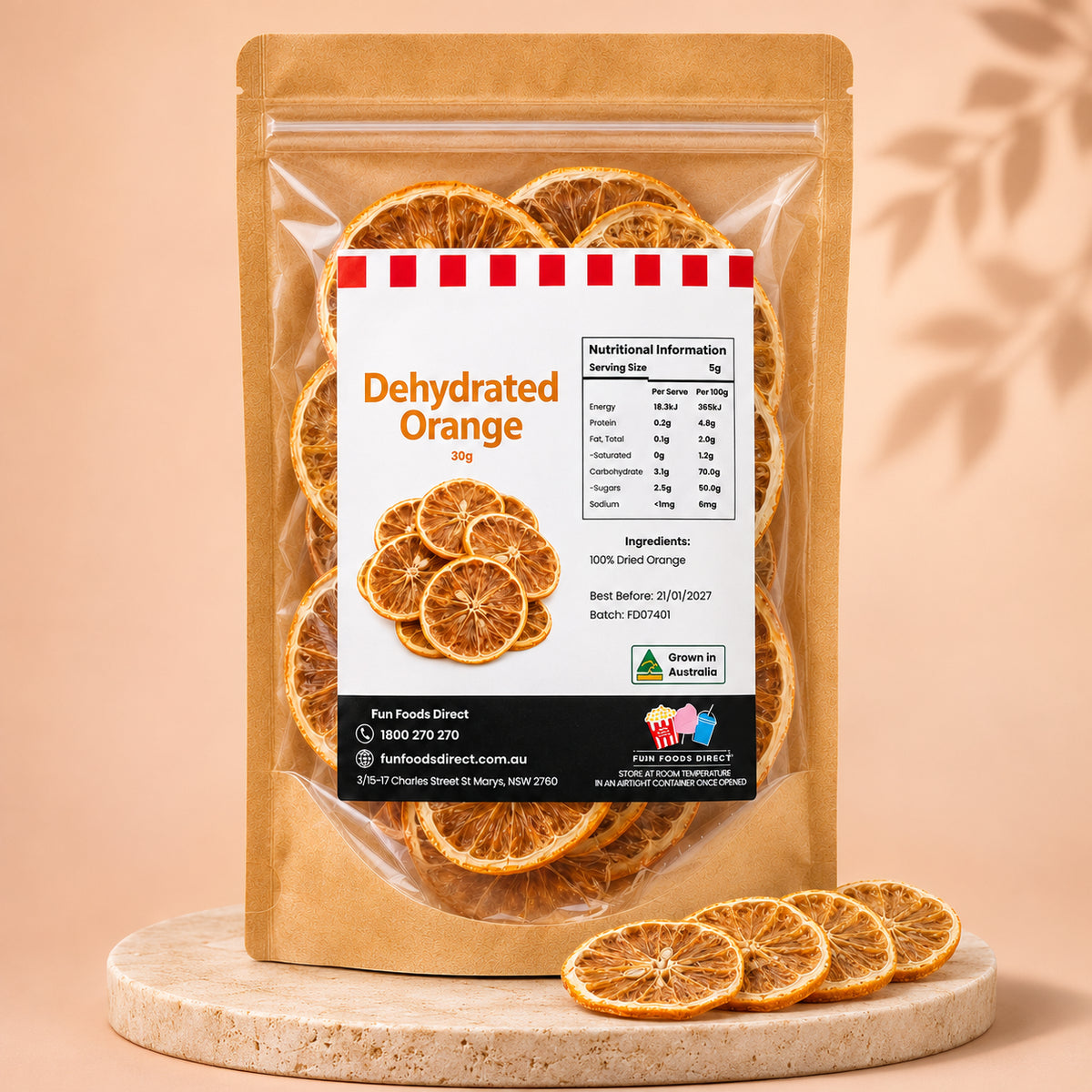
Dried Orange Slices | Premium Citrus Garnish for Cocktails, Desserts & Drinks

Weight: 30g
$5.25 AUD
$5.25 AUD
Sale Sold out
🛒

Ordered

Today
📦

Shipped

--/--/----
↓
--/--/----
🚚

Delivered

--/--/----
↓
--/--/----

Estimated dates only. Delivery times vary by location, stock availability and courier. Shipping Information

Payment Methods

American Express Apple Pay Google Pay Mastercard PayPal Shop Pay Union Pay Visa Afterpay

We offer reliable Australia-wide delivery, with orders dispatched from our Sydney warehouse.

Shipping costs are displayed at checkout. Delivery times vary depending on your location, product availability and courier services. Additional freight charges may apply to bulky or oversized items.

View our Shipping & Delivery Policy →

We want you to be satisfied with your purchase. Eligible change-of-mind returns can be requested within 7 days of receiving your order, subject to our returns policy.

Some products are excluded from change-of-mind returns, and restocking fees may apply. If your order arrives damaged, faulty or incorrect, please contact our team for assistance.

View our Returns & Refunds Policy →

View full details

Fast Direct Packaging · Cocktail & Beverage Garnishes

Dried Orange Slices: a considered finishing touch

Bring warm sweet-citrus character to suitable drinks, desserts and event presentation with ready-to-use dried orange slices. Select the listed pack above and let the natural fruit shape do the visual work.

A dried slice is a garnish. Build the underlying recipe for taste, then add the fruit as a deliberate finish.

DRIED
ORANGE
GARNISH
FruitDried orange slices
Selected pack30g
Best fitDrinks & desserts

The fruit profile

What makes orange useful

Dried orange has warm sweet-citrus character. In a finished drink, the fruit wheel is both a flavour cue and a visual signal: guests can tell at a glance which direction the menu is taking. The most convincing use is one that fits the drink itself. A garnish should reinforce what is already in the glass rather than promising an ingredient that the base recipe does not contain.

Use the shape and natural variation of the fruit to your advantage. A clear glass may show the slice against the beverage; a short glass may call for a smaller, restrained placement. On a dessert plate, use the fruit as one detail among the main components. The pack is convenient for a bar or café station because staff can portion the finishing element without cutting fresh orange for every order.

The strongest pairings to test are old fashioned-style drinks, iced tea, hot chocolate, chocolate desserts. Choose one direction for a menu trial and assess it as a complete serve. Colour and flavour are naturally variable in dried fruit, so compare the actual pack with the picture, and train staff to present that variation as part of the ingredient rather than as a defect.

Pairing notes

Four ways to present dried orange

Serving direction 01

Orange cocktail finish

Add a dried orange wheel to a short drink for a warm citrus visual without fresh fruit cutting at service.

For a working orange garnish standard, test one completed serve and note the glass or plate, the garnish position and the point at which staff add it. That small detail helps each order look intentional.

Serving direction 02

Citrus iced tea

Use the slice in a clear glass with iced tea and plenty of room for the garnish to show.

For a working orange garnish standard, test one completed serve and note the glass or plate, the garnish position and the point at which staff add it. That small detail helps each order look intentional.

Serving direction 03

Chocolate dessert

Pair orange with a chocolate plate as a flavour and colour cue, keeping the fruit as a finishing detail.

For a working orange garnish standard, test one completed serve and note the glass or plate, the garnish position and the point at which staff add it. That small detail helps each order look intentional.

Serving direction 04

Winter drink station

Place one slice on a warm-spiced beverage only when the recipe and serving vessel suit it.

For a working orange garnish standard, test one completed serve and note the glass or plate, the garnish position and the point at which staff add it. That small detail helps each order look intentional.

Drinks: match the garnish to the recipe

Begin with a drink that genuinely suits orange: old fashioned-style drinks or iced tea can provide a starting point. Make the drink to its normal specification first. Then place the dried slice where it is visible and practical for the chosen glass, cup or takeaway lid. Check that it does not block the drinking edge or disappear beneath ice and other toppings.

For a menu with several citrus or fruit garnishes, give each drink a clear visual standard. A orange slice should not be swapped casually for another fruit when the menu name promises this one. A short build card for staff can specify the fruit, position and number of slices without turning every service into an elaborate styling exercise.

Desserts: keep the plate balanced

A dried orange slice can make a compatible dessert feel complete. Consider chocolate dessert or another compatible serving when building a plated special, and let the main dessert remain the focus. If the dish needs fresh fruit, juice or a soft filling, add those ingredients separately; a dried slice plays a different textural role.

Before including the garnish in a product photograph or menu, plate the final dessert exactly as it will be served. Watch the proportion of fruit to portion, the colour against the plate and the ease of eating. Those checks are particularly useful for takeaway desserts and event catering where presentation time is limited.

Natural colour and texture variation

Drying changes the appearance of fresh orange. Slices may vary in size, tone and shape between individual pieces and batches. This is especially noticeable when a fruit has a rind, pith or translucent centre. Treat the photographs as a general guide, and review the actual pack if a highly specific colour is important for an event or campaign.

Keep the garnish protected from moisture and follow the current pack's storage directions. Do not promise that a dried slice will supply the same juice, acidity or texture as fresh fruit. It can sit on the rim, float in a compatible drink or finish a dessert, but the base recipe should carry the flavour and balance that the customer has been promised.

Build a repeatable bar station

A ready-to-use garnish is most useful when staff know where to keep it, which utensil to use and which drinks take it. Store the pack in a clean, dry place according to the label, set a portion standard and prepare a simple example serve. A controlled station helps reduce waste and keeps presentation consistent during busy service.

If you are creating an event drink, test the orange slice in the actual cup or glass before finalising the menu. Ice, lids, straws and other garnish elements can affect placement. A beautiful studio image is less useful than a finish that works at the counter.

Pairings to test

  • old fashioned-style drinks: a possible orange garnish direction to trial in the finished menu item.
  • iced tea: a possible orange garnish direction to trial in the finished menu item.
  • hot chocolate: a possible orange garnish direction to trial in the finished menu item.
  • chocolate desserts: a possible orange garnish direction to trial in the finished menu item.

Each pairing changes the role of the fruit slightly. The same slice might signal citrus in a sparkling drink, echo a fruit note on a dessert plate or add visual warmth to a darker beverage. Keep the final combination simple enough for customers to understand immediately.

Buying and service checklist

This product is listed as dried orange slices, with the selected pack shown above. Confirm the current label, ingredient list, allergen information, weight and best-before date when those details matter to your kitchen. Fruit appearance varies naturally, and a beverage photo should not be treated as an exact representation of every piece in the pack.

For a café, bar or catering business, decide which two or three menu items will actually use orange before ordering for volume. Estimate the number of serves from a trial pack, account for breakage or natural variation, and document the placement. When serving a customer with dietary requirements, verify the actual pack and the complete drink or dessert recipe.

Menu photography and everyday service

Photograph one real orange drink or dessert after it has been prepared for the customer. Show the glass, portion and garnish placement at the same scale guests will receive. If you use dried orange with old fashioned-style drinks, make that pairing explicit in the menu text so the picture and recipe tell the same story. A second photo can show the selected pack or a close-up of the fruit, but avoid suggesting that every natural slice has an identical shape.

For a busy service, agree on a simple fallback if a slice is broken or too large for the chosen glass. Staff can pick a suitable piece from the pack, place it consistently, and keep the drink balanced. Review the appearance after ice melts or a takeaway order has travelled. This small rehearsal makes the garnish practical as well as attractive and helps keep the finished offer faithful to what customers see online.

Quick answers

Dried orange FAQs

What is in the Orange garnish pack?

This listing is for dried orange slices in the selected 30g pack. Read the current pack label for the exact ingredient and weight details before ordering or serving.

Are the slices ready to use?

Yes, the product is presented as a ready-to-use dried fruit garnish. Use clean utensils to portion the amount you need and add it at the point that suits the drink or dessert presentation.

Will every orange slice look identical?

No. Drying and natural fruit variation can change the shade, shape and size between slices and batches. The product photographs are a guide; the actual fruit can look different from fresh-cut orange.

Can I use dried orange in cocktails and mocktails?

Yes. It can be used as a visual garnish in suitable cold drinks. Pair it with a recipe that already makes sense for orange and check how the slice looks after contact with the liquid.

Can it be used on desserts?

Yes. Use a small, deliberate amount on a compatible dessert or platter. Keep the fruit visible and proportionate to the serving rather than covering the dish.

Does a dried slice replace fresh juice?

No. This is a dried garnish, so a recipe that needs fresh juice, acidity or a measured liquid ingredient still needs those components separately. Treat the slice as a finishing detail.

How should I store the pack?

Follow the current pack label for unopened and after-opening storage and best-before guidance. Keep the garnish sealed and protected from moisture during service.

How can I check dietary or allergy details?

Use the ingredient and allergen statement on the actual pack and consider the entire recipe. Do not infer a dietary certification from the fruit name or serving suggestions on this page.

Finish the next serve with orange

Select the dried orange pack above for a drink or dessert that calls for this fruit. Compare the other garnishes in the collection if your menu needs another citrus or orchard direction.

Explore cocktail and beverage garnishes →