


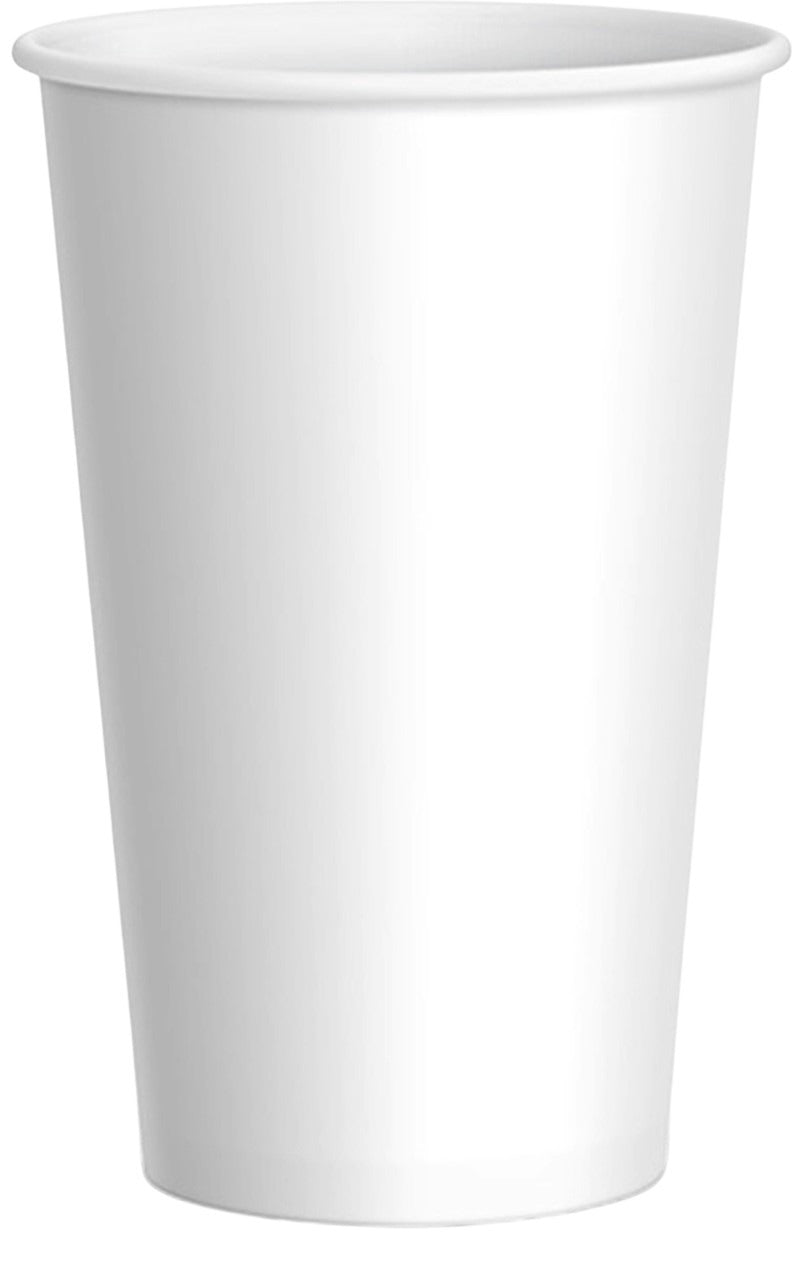
4 oz (120 mL) and 6 oz (180 mL) options can suit tastings, small drinks and compact service.
FAST DIRECT PACKAGING · CHILLED BEVERAGE PACKAGING
White paper cups in five useful sizes
White Paper Cups 50's are offered in 4 oz, 6 oz, 8 oz, 10 oz and 16 oz options. The listing describes them for hot and cold beverages, including small slushies and soft drinks. Choose the capacity that fits the drink you actually serve, then select that variant above. The pack count is 50 cups for each listed size.
- 4–16 oz options
- 50 cups per selected pack
- White paper finish
- Check lid compatibility separately
8 oz (240 mL) and 10 oz (300 mL) options offer a larger cup for a measured menu portion.
16 oz (480 mL) is the largest listed size. Confirm the selected pack and intended beverage before ordering.
Choose by your finished drink, not just the cup label
A cup size is a nominal capacity, while the amount a customer receives depends on ice, foam, toppings and the headroom needed to prevent spills. A 4 oz tasting cup may be appropriate for a small beverage sample but too small for a menu item with crushed ice. A 16 oz cup can fit a more generous cold drink, yet it may be larger than the portion your staff can serve consistently. Before buying for an event, fill one example with the actual drink, leaving the same space you will allow at the counter.
The current size choices are 4 oz (120 mL), 6 oz (180 mL), 8 oz (240 mL), 10 oz (300 mL) and 16 oz (480 mL). Use these listed capacities as a selection guide; your finished serve should be measured independently. The same beverage may look different in a narrow, tall cup and a wider one. If appearance matters for a menu photo, photograph the drink in the exact cup size you plan to stock and include any lid or straw you use.
For a venue with several prices, define the portion by cup size and record the amount of drink or concentrate that goes into each. A staff member should be able to tell a customer the difference between small and large without estimating by eye. If you change cup size later, check the recipe and price again. A larger cup can change how much ice, syrup, milk or garnish goes into the drink as well as the packaging cost.
Hot and cold service considerations
The product description lists these paper cups for hot and cold drinks. That does not by itself establish an insulation rating, safe holding temperature, or suitability for every liquid and service time. For a hot beverage, test the filled cup under your operating conditions, use a sleeve or suitable carrier if needed, and follow local food-service practices. If a customer will carry a hot drink away from the counter, a fitted lid and a comfortable way to hold the cup are important parts of the complete setup.
For a cold drink, check how the cup behaves with condensation, ice and the time between filling and consumption. A slushie or iced drink may need more headroom and a wider straw than a still beverage. If you plan to serve a thickshake or frappe, test whether the selected size fits the finished volume after blending, not just the liquid ingredients before blending. Keep a filled sample at the station as a visual reference when training staff.
Paper is a material description, not a complete disposal instruction. Recycling rules differ by local service and cup lining. Check the packaging and local waste guidance before making a recyclability or compostability claim to customers. If a particular environmental specification is required for a tender, request current product documentation instead of assuming it from the word “paper.”
Practical check: Select the exact size above, then test your drink, lid, sleeve, straw and transport method together. Lids and accessories should be chosen by confirmed fit; nominal ounce capacity alone does not prove compatibility.
A simple size guide for cafés and events
For a sample station, the 4 oz cup can make it easier to offer small measured tastings without using a full menu cup. The 6 oz option gives a little more room for a compact hot or cold serve. An 8 oz cup is a familiar mid-size reference for many drinks; the 10 oz option gives space for a longer beverage. The 16 oz size may suit a larger cold drink or a generous menu portion. These are planning examples, not instructions to fill each cup to its rim. The right selection depends on the finished recipe and your customers.
When an event has several drink stations, a single size can simplify purchasing and training, but a specialty drink may need its own cup. A thick blended frappe, for instance, may take more volume than a simple lemonade in the same nominal portion. If you offer toppings or whipped cream, leave enough headroom for a lid or a neat hand-off. If you serve hot coffee as well, run a separate handling trial with the hot version.
Keep the chosen size visible on the menu. If guests can upgrade, show the price and size difference clearly. A printed menu that says “regular” and “large” without capacities can be confusing when several cup styles are used. Staff can answer more confidently when each item has a recipe card naming its cup, fill level and any accessories.
Open the purchasing and service guide
Plan quantities from real service
The product is listed in packs of 50 per selected size. Start with your expected number of drinks and allow a sensible margin for samples, remake requests, spills and damaged cups. If you expect 120 saleable drinks in one size, two 50-packs would be short even before wastage; three packs offer 150 cups in that example. This arithmetic helps you compare options, but attendance is not the same as sales. Use records from a similar event or a small trial to make the estimate more reliable.
Track cups opened and cups remaining at the end of service. If several sizes are offered, record each separately. The number of 8 oz drinks sold does not tell you how many 16 oz cups to order next time. For an event business, keep a packing list with cups, fitted lids, straws, napkins and a few spare packs. For a café, note the reorder point for each size so a popular drink does not stop selling because only the wrong cup remains.
Store unopened packs in a clean, dry place as appropriate to the packaging. At the counter, move one controlled stack into service and keep the reserve protected from splashes and handling. Use a cup dispenser or a clearly marked area so staff can reach the correct size quickly. If sizes look similar when stacked, label the shelf or container. A quick size check at the point of preparation prevents an expensive drink from being remade in the wrong cup.
Build a complete takeaway setup
A cup is one part of the customer experience. A drink that is served across a crowded event may need a secure lid and an accessible waste point. A hot cup may benefit from a sleeve or carrier. A thick cold drink needs a straw suited to its texture; a spoon may be useful for toppings. Check each accessory with the actual cup you select. The store's beverage packaging collection is a starting point for browsing, but the exact product dimensions and matching details should govern what you order.
Test a filled cup in the way a guest will hold and carry it. Does the lid stay in place? Does a wide straw fit? Is there room for a garnish? Does the cup feel comfortable when filled with a hot drink? Does a cold drink begin to soften the cup after a period of standing? A short test can reveal issues before you buy supplies for a large function.
If you use printed labels or stickers, apply them where the cup stays dry and the writing remains readable. A label for “regular” and “large” can help a busy team, but the recipe card should still specify the actual cup size. If customers have an allergy question, the cup label should never substitute for the ingredient details of the beverage itself.
Cost and sustainability questions
Calculate the cost per finished drink by dividing the pack price by 50 and adding the lid, straw, sleeve or carrier you actually use. Packaging cost can differ between a tasting and a large takeaway drink. Factor that into your menu price and staff instructions. If you change from a 10 oz to a 16 oz cup, consider the extra beverage ingredients as well as the cup cost; otherwise the apparent margin may be misleading.
Waste handling depends on the material construction and local services. Keep cups and other single-use items in an appropriate bin, and ask your waste provider how they handle the selected product. If your venue has a public sustainability statement, use documented specifications for this exact cup rather than broad claims about all paper cups. Clear, accurate guidance is more useful to a guest than an unsupported symbol on a menu board.
Make the choice easy at a glance
The five sizes allow a small business to standardise drinks without forcing every item into one cup. Begin with the most common finished beverage, choose a cup that holds it neatly with realistic headroom, and test the same setup with a lid or straw. Then add another size only if it improves customer choice or preparation. A small menu with measured portions can be served faster than a large menu whose cup and recipe choices are inconsistent.
Before placing an order, review the selected variant and current price above. All sizes are listed as 50-cup packs, but the capacity changes with the option. If a product image shows a different size or a drink prepared for illustration, rely on the selected option for what will be supplied. For questions about matching accessories or larger venue planning, contact the store with the chosen size and how you plan to serve the drink.
Stock by size and keep the counter clear
Separate the 4 oz, 6 oz, 8 oz, 10 oz and 16 oz packs in storage and put a clear size label at the service point. Similar white cups can be picked up in the wrong order when the queue is busy. Open only the pack needed for the next period, protect the reserve from moisture and dust, and give staff a simple refill location. If a cup is visibly damaged or no longer clean, replace it before filling.
At the end of a shift, count unused packs by size rather than recording only a combined cup total. A venue may sell many 8 oz drinks but few 16 oz serves. Tracking them separately makes the next 50-pack order more accurate. It also reveals when a menu or cup-size change alters the packaging needed for the same number of customers.
White paper cup FAQs
How many cups are in a pack?
The listing describes a pack of 50 for each selected size. Check the chosen variant above before checkout.
What sizes can I choose?
4 oz (120 mL), 6 oz (180 mL), 8 oz (240 mL), 10 oz (300 mL) and 16 oz (480 mL) are listed. Choose the capacity for your finished serve.
Can I use them for hot drinks?
The product information says hot and cold use. Test the selected cup and add appropriate handling accessories for your drink temperature and service method.
Are lids included?
The product is listed as paper cups. Confirm any lid separately and test its fit with the exact cup size.
Can I serve slushies in them?
They are listed for cold beverages including small slushies. Test the size and headroom for your recipe and choose a suitable straw or spoon.
Are these cups recyclable?
Check the current product material information and local waste service. Paper cups can have linings, and recycling rules vary.
Choose the cup that fits your menu
Select a 50-cup size above, browse chilled beverage packaging or thickshake supplies, and contact Fast Direct Packaging for matching questions.