


Fast Direct Packaging · drinks made to order
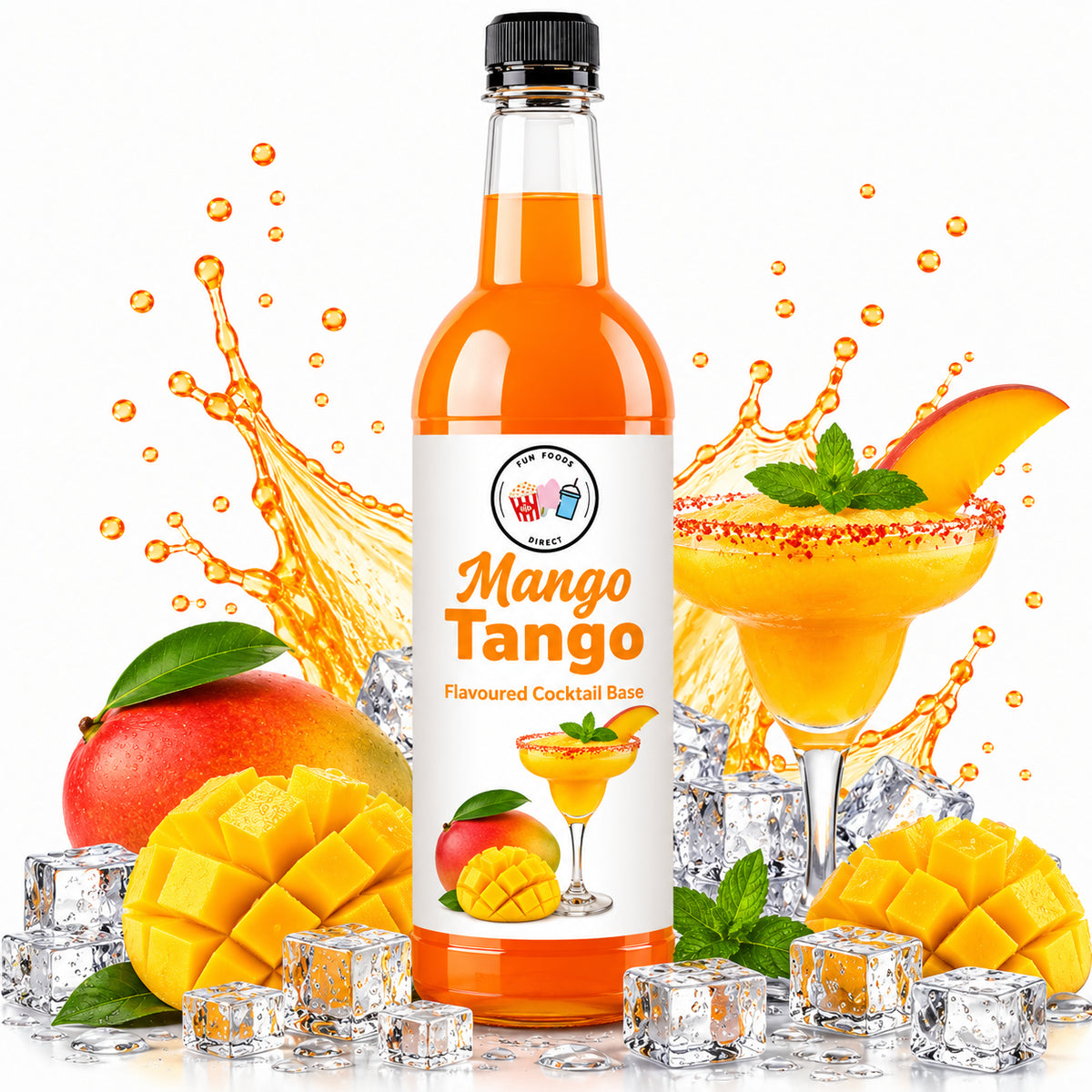
Mango Tango Premium Cocktail Mix
Mango Tango Premium Cocktail Mix is an 800 mL flavoured syrup base for bars, cafés, caterers and event menus. Mango Tango offers a tropical-sounding name with a straightforward white-rum and soda serve. It is suited to a simple long drink over ice. The suggested chilled serve combines 30 mL of this base with 120 mL soda water and 30 mL white rum. The ingredient and nutrition details below describe the syrup itself.
Ingredients
Water, Sugar, Dextrose, Food Acid (330), Flavours, Colour (123), Preservative (211).
These are the ingredients in the bottled syrup. Spirits, juice, soft drinks, coffee, fresh fruit, ice cream and garnishes are separate additions when used.
Chilled drink recipe
- 30 mL Mango Tango syrup base
- 30 mL white rum
- 120 mL soda water
- A handful of ice
Fill a glass with ice, add the syrup, white rum and soda water, then stir gently and serve.
Nutrition per 25 mL of syrup
The 800 mL bottle contains 32 nutrition servings of 25 mL each. These numbers describe the syrup, before mixers or other ingredients are added.
The recipe uses 30 mL syrup per drink, which is different from the 25 mL nutrition serving.
- Energy
- 402 kJ
- Protein
- <1 g
- Total fat
- 0 g
- Saturated fat
- 0 g
- Carbohydrate
- 22.3 g
- Sugars
- 22.3 g
- Sodium
- 12 mg
Use the ingredients and amounts of the completed drink when assessing a finished serve.
Serve Mango Tango chilled
The simplest way to start is the measured chilled recipe: 30 mL of Mango Tango base, 120 mL soda water, 30 mL white rum and a handful of ice. Fill a glass with ice, add the syrup, white rum and soda water, then stir gently and serve. Together, the measured liquids add up to 180 mL before ice and any garnish.
Soda water provides the measured dilution in the suggested chilled drink. If you want a juice-based variation, test and name the juice separately. Make one glass with the actual ingredients you will serve before preparing several. Glass size, ice quantity and a substitution in the mixer can all change the appearance and balance even when the syrup measure remains the same.
When preparing drinks in hospitality service, measure the syrup rather than pouring by eye. Put the syrup measure, mixer, ice and garnish on a one-page staff recipe card. A defined method gives each bartender the same starting point and makes ingredient costing more useful. A successful one-glass trial can become the reference for a party round or a menu serve.
Make a mocktail
For an alcohol-free Mango Tango serve, leave out the white rum and prepare the syrup with soda water and ice. The measured liquid will be 150 mL before ice; taste it before deciding whether to add more soda water for a longer drink.
Keep the mocktail directions clear enough for somebody else to follow. Choose the specific soda water product, decide on a glass and ice portion, and record any garnish you actually add. A version made with a different juice or soft drink should be treated as its own recipe.
Name the cocktail and mocktail versions separately on the menu, and specify any spirit, juice, coffee, ice cream or garnish that goes into the finished serve. The syrup's nutrition panel covers only the concentrate, so the finished mocktail depends on every added ingredient.
Blend a frozen version
Place the measured syrup, soda water, white rum, and ice in a blender and process until smooth and frosty. Add ice gradually if you want a thicker, slushie-style texture. A test portion makes it easier to adjust the blend without committing the whole bottle.
Texture is affected by the amount of ice, how long you blend and the particular soda water you use. For an alcohol-free blended drink, omit the spirit where the chilled recipe includes it; taste the result before naming it as a finished menu option.
Record the liquid and ice measures that work in your blender. A frozen glass does not necessarily produce the same number of serves as a chilled glass, and this bottle does not provide a fixed dilution for every commercial frozen-drink machine.
What goes into the finished drink
The syrup ingredients list flavours without naming mango flesh as a separate ingredient. Fresh mango or puree is an optional addition to a recipe you make yourself. The bottled concentrate provides the base; fresh additions become ingredients of your completed drink.
Mango Tango is measured with white rum and soda water, which makes its service distinct from the pineapple-juice recipe for Piña Tropical Paradise. Both names can sit on a tropical menu, but the liquid you add creates a meaningful difference for guests. The syrup ingredient list does not identify pieces of mango. Add fresh mango only when it belongs to a separately tested glass, and include any fruit or juice you use in the menu description of that finished drink.
Soda water provides the measured dilution in the suggested chilled drink. If you want a juice-based variation, test and name the juice separately. If you choose another mixer, compare the result in a finished cold glass rather than judging a room-temperature sample. Carbonation, sweetness, acidity and the amount of ice can each affect how the drink tastes after several minutes.
For a garnish, choose something that suits the recipe you have tested and prepare it separately. A fruit slice, mint sprig, salted rim or dessert topping should only appear in a menu description when it will actually be served.
Choose a presentation that fits
The same bottle can support different presentation ideas, but each should have its own recipe. A drink over ice, a blended drink and an ice-cream-style treat have different liquid, ice and ingredient requirements. Decide which experience you want before choosing the glass and garnish.
When preparing drinks in hospitality service, begin with one finished sample. Take note of whether the glass has room for ice, whether the mixer stays lively through service and whether the drink is easy for another person to reproduce. If you change a component, taste again.
For event service, test the finished drink with the exact mixer and glassware you plan to stock, then train the team on that result. These small choices make the presentation more consistent than relying on a picture or a flavour name alone.
Compare it with another cocktail base
Mango Tango sits alongside Piña Tropical Paradise, whose suggested recipe uses pineapple juice. The two products can have different drink styles even when their syrup ingredients share a similar format, because the chosen mixer, spirit and method determine the completed glass.
If you are planning more than one option, put different preparations on the menu instead of repeating the same drink under two names. Pair a soda serve with a juice-based or coffee-style option where those recipes are available. Guests can then choose by serve, not just by the product name.
Choose the mixer and garnish for each flavour separately, then make a sample glass before serving a larger round. A garnish, spirit or mixer from another flavour's recipe should only be included after a separate test.
Portions and shopping quantities
The 800 mL bottle provides 32 portions at the 25 mL nutrition serving size. At the chilled recipe's 30 mL syrup measure, it provides 26 full pours with 20 mL remaining before tasting, spills or other loss. Use the recipe measure when buying for drinks and the 25 mL measure when reading the nutrition figures.
Ten measured drinks call for 300 mL syrup, 300 mL white rum, and 1.2 L soda water before ice. Twenty drinks need 600 mL syrup and twice the separately chosen additions. Allow more if you plan trial glasses or expect refills.
Forecast the number of serves by style, then cost syrup, mixer, spirit, ice, cup or glass and garnish. Keep a margin for training pours, test glasses and waste. For a blended version, calculate servings using your tested pour and actual glass size rather than assuming that the chilled yield applies.
Set up a bar or café prep station
Put the syrup measure, mixer, ice and garnish on a one-page staff recipe card. A defined method gives each bartender the same starting point and makes ingredient costing more useful. Place glasses, ice and any garnish where they can be reached without interrupting the preparation.
Name the cocktail and mocktail versions separately on the menu, and specify any spirit, juice, coffee, ice cream or garnish that goes into the finished serve. A short ingredient line beside the recipe helps people distinguish the syrup from separately added spirits, juice, coffee and fresh garnishes.
Keep mixers chilled when the recipe calls for a cold serve, and assemble carbonated drinks close to serving. If several people make the drink, check the first few glasses against the same measure and method.
Understand the syrup's nutrition
The nutrition information is for a 25 mL serving of the syrup: 402 kJ energy, less than 1 g protein, 0 g total fat, 0 g saturated fat, 22.3 g carbohydrate, 22.3 g sugars and 12 mg sodium. The bottle lists 32 such servings.
Sugar and dextrose appear in the ingredient list. The syrup is not a sugar-free product. A mixed drink can contain additional energy and sugars from a spirit, juice, lemonade, ice cream or other mixer; the figures above describe the syrup alone.
When dietary information is needed for a menu, use the complete recipe and the specifications of every ingredient you actually add. Do not transfer a syrup-only number to a full cocktail, mocktail or milkshake.
Store and handle the syrup
Store the concentrated syrup at room temperature and refrigerate after opening. Close the bottle between uses and use a clean measure. Follow the date on the bottle supplied rather than using a fixed shelf-life estimate for every batch.
Keep fruit, juice, coffee, ice cream and any other additions under the storage conditions that apply to them. A prepared drink is a combination of ingredients, and the syrup's storage direction alone does not determine how long a completed drink may be kept.
Prepare chilled glasses when they will be served, especially if they contain ice or a carbonated mixer. This helps keep the result consistent from the first pour to the last.
Put it to work on a drinks menu
Train staff with a finished sample of Mango Tango and record the syrup, mixer, optional spirit, ice, glass and garnish. The same measurements support consistent customer service and a clearer cost per glass.
To distinguish this option from Piña Tropical Paradise, whose suggested recipe uses pineapple juice, explain the actual preparation and mixer in the menu line. A guest benefits more from a useful description of the drink than a list of vague flavour promises.
When stock or a mixer brand changes, retest the completed serve and revise the recipe card if required. Keep the syrup's ingredient information separate from those of added products.
Questions about Mango Tango
What is this product?
Mango Tango Premium Cocktail Mix is an 800 mL flavoured syrup base for drinks. You combine it with other ingredients to make a finished cocktail, mocktail, blended drink or another tested presentation.
Does the bottle contain the spirit or mixer?
No spirit, soda water or fresh garnish is listed as an individual syrup ingredient. Add those items only when making the completed drink, and describe the serve according to what you used.
How do I make a chilled drink?
Fill a glass with ice, add the syrup, white rum and soda water, then stir gently and serve. Use 30 mL syrup, 120 mL soda water and ice, plus 30 mL white rum.
Can I make a mocktail?
Yes. Use the suggested syrup and soda water quantities without adding white rum; taste and adjust the mixer if you want a longer glass.
Can I blend it with ice?
Try a small blender portion with the syrup, your chosen liquid and ice. Add more ice gradually for the texture you want. Record the amounts before preparing a larger batch.
How many glasses can I make?
At a 30 mL syrup measure, 800 mL provides 26 full pours and leaves 20 mL before tasting or loss. The 32 servings in the nutrition information use 25 mL syrup each. Actual drink yield depends on your chosen recipe.
Is it sugar free?
No. The syrup lists sugar in its ingredients and 22.3 g sugars per 25 mL serving. Other ingredients in the completed drink can change its nutrition.
How should I store it?
Store the concentrated syrup at room temperature and refrigerate after opening. Keep the bottle closed and follow the storage needs of any ingredients you add.