


Measure both components before adding ice or any other ingredient.
CORDIAL CONCENTRATE · FAST DIRECT PACKAGING
Red Raspberry cordial for a clearly measured drink
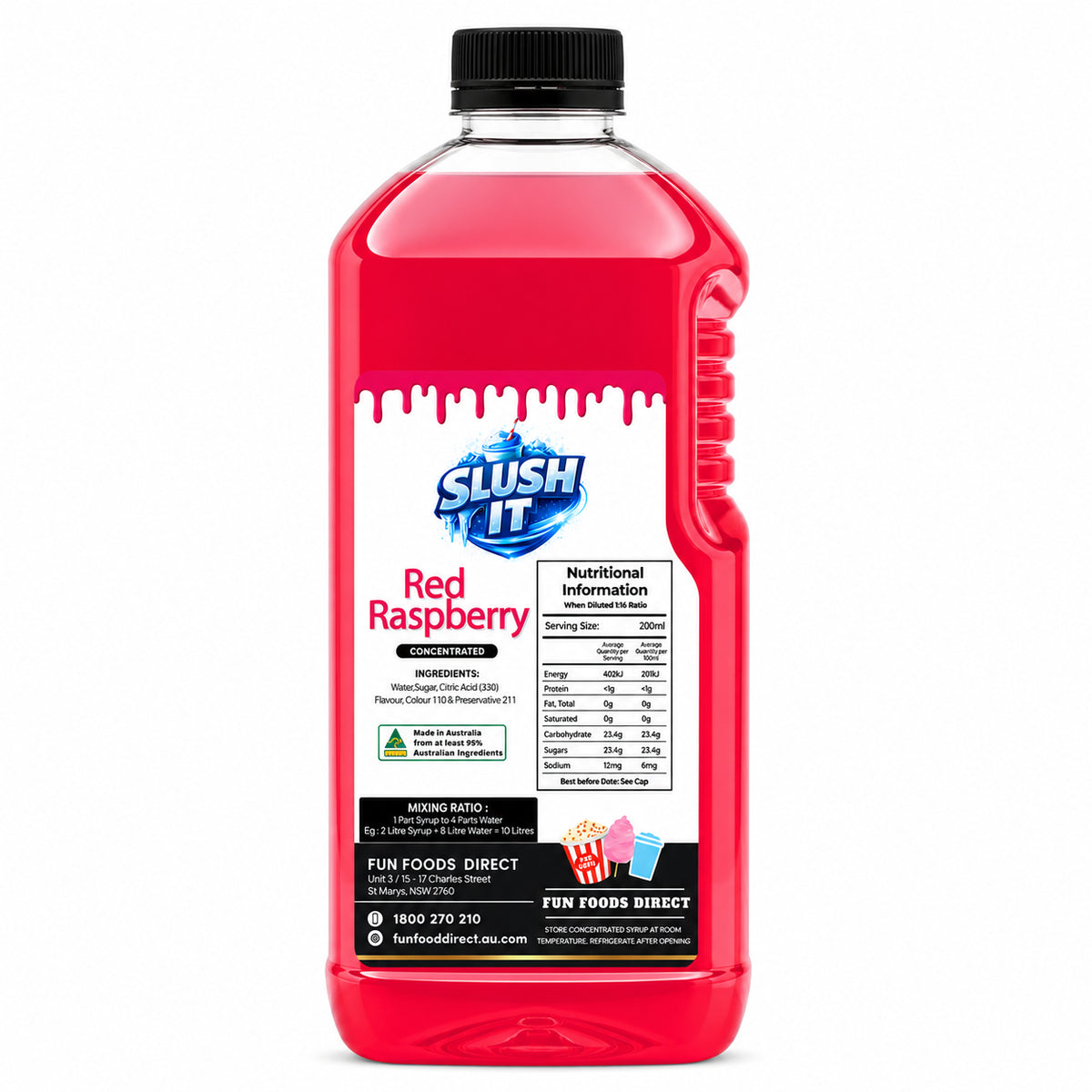
This 2 L Red Raspberry cordial concentrate is listed for dilution at one part cordial to four parts water. It offers sweet red raspberry-inspired fruit flavour for chilled drinks at home, cafés, events or a service counter. Start with the stated ratio, taste the prepared drink, and use the current bottle for ingredient, storage and dietary details.
Red Raspberry flavour2 L concentrate1:4 cordial to water10 L prepared liquid from 2 L
This makes 10 L of liquid drink before ice, service loss or additions.
This makes 1.25 L, a practical amount for testing flavour and cup size.
Meet the Red Raspberry flavour
Red Raspberry has sweet red raspberry-inspired fruit flavour. The name gives a customer a quick idea of the taste direction, while the finished drink depends on dilution, serving temperature and anything you add. Pair it with a citrus mixer for a second menu item after testing the plain diluted version. Keep the red and blue raspberry options clearly named. The product is a cordial concentrate rather than a ready-to-drink bottle, so the first step is to prepare it at the current instructions before deciding whether the menu needs a second version.
A fruit-inspired cordial offers a clear menu cue, but the prepared drink's sweetness and intensity depend on dilution, ice and any extra ingredients. Build one still-water version at the stated ratio before testing soda, lemonade or a mixed fruit mocktail. If another berry or citrus flavour is offered nearby, describe each in plain language so customers can choose. Do not use a fresh-fruit claim unless the bottle supports it. At the counter, identify the flavour by name on the dispenser and on the staff recipe card, especially when several drinks have similar colours.
A clear menu starts with the named flavour and the drink format. “Red Raspberry cordial over ice” tells a guest more than an unexplained colour or a generic “fruity drink.” If you also offer a sparkling version, specify that separately. The two drinks can share the same concentrate but need their own service instructions because carbonation, ice and cup size change the finished result. Keep a photograph of the version you actually serve.
Do not repeat broad ingredient or certification claims from a general range description for every flavour. The current bottle determines the exact composition, nutrition, allergens, storage and any certifications. If a guest asks about fresh fruit, sweeteners, caffeine or alcohol, read the current label and the ingredients of your complete drink before answering.
Mix a reliable Red Raspberry cordial batch
For a full 2 L bottle at the stated 1:4 ratio, measure 8 L of water in a clean food-safe vessel and add the 2 L cordial. Mix thoroughly so the flavour is even throughout the 10 L liquid batch. A smaller trial can use 250 mL cordial and 1 L water. A half-bottle batch uses 1 L cordial and 4 L water for 5 L prepared liquid. These calculations are for the liquid before ice and do not tell you exactly how many cups will be sold.
Prepare a sample in the real cup your venue uses. Ice takes up space and melts into the drink, so a nominal 250 mL cup is not necessarily filled with 250 mL of prepared cordial. If you sell a 250 mL liquid portion without ice, 10 L divided by 250 mL is a theoretical forty portions before spills or hold-up. Count the cups from a trial batch and use that practical yield for ordering bottles and packaging. Do not change the mixing ratio simply to make a forecast look larger.
For a sparkling version, make a measured test with a compatible carbonated mixer and serve it promptly. Add carbonation in a way that suits your equipment and avoids excessive foam. Record the quantity of cordial and the finished volume; replacing water with another mixer can change sweetness and flavour. The label's instructions are the reference point if they differ from the current online description.
Mixing note: The 1:4 instruction means 2 L concentrate plus 8 L water, giving 10 L liquid. It does not mean 2 L plus 10 L water. Follow the current bottle and venue food-handling requirements.
Three ways to put Red Raspberry on a menu
red raspberry cordial: Start with the standard dilution and serve chilled in a measured cup. This is the simplest way to let the Red Raspberry profile stand on its own. Show the cup size and any ice or garnish that is included with the order.
raspberry soda: Test a sparkling or longer drink as a separate recipe. Keep the amount of concentrate written down and taste after the ice has begun to melt. Use a menu name that distinguishes it from the plain still-water version.
berry-citrus mocktail: Build a considered mocktail or event serve from the diluted cordial, compatible mixer and optional garnish. Make a small sample first, then record the exact ingredients and presentation. A suggested pairing is not a claim that another ingredient is included in this bottle.
Pick only the versions you can prepare reliably during a rush. A small venue may do best with one standard Red Raspberry cordial and one signature alternative. If you add a flavour syrup, fruit, rimming garnish or optional spirit, treat it as a separate component with its own ingredient and costing information. Keep the drink description accurate for guests who choose a mocktail.
Open the venue preparation and planning guide
Set up a tidy cordial service
Keep the bottle, measuring jug, water supply, clean mixing vessel and cup stock together. Label any prepared batch with the flavour, time and handling information required by your venue. If several cordials are served from dispensers, put the name Red Raspberry where both staff and customers can see it. Similar colours are not a reliable substitute for labels, especially when a customer has an ingredient question.
Move only the amount you expect to serve into the dispenser according to your food-safety procedure. Keep the source bottle closed and follow its storage instructions after opening. Use clean tools for each flavour; a measuring jug with residue from another cordial can alter the taste of a small batch. Wipe spills promptly so the customer area stays pleasant and the cup stack remains clean.
At an event, have a refill plan. A full bottle makes a 10 L liquid batch at the stated ratio, but your dispenser may hold less. A 5 L half-bottle batch may be easier for a compact station. Calculate the water and concentrate for the actual vessel before filling it. Keep a written batch card nearby so a second staff member can prepare the refill without improvising quantities.
Stock, costs and service capacity
To estimate demand, start with the expected number of guests, the size of the served cup and the number of other drinks available. A school or family event may favour one flavour mix; a café may sell fewer but more regular serves. Use sales from a comparable day if available. Convert the forecast into liquid volume using your actual portion, then allow for ice, tasting and service loss. The theoretical forty 250 mL portions from 10 L are useful arithmetic, not a guaranteed yield.
Cost the cordial from the bottle price and the measured amount used per drink. Add water or mixer, ice, cup, lid, straw, garnish and labour as appropriate. If the sparkling Red Raspberry drink uses a purchased mixer, it may cost more than the still version even with the same cordial quantity. A clear recipe card helps staff serve consistently and lets the venue understand which menu item has the margin it expects.
Check storage space before ordering multiple bottles. Keep unopened and opened product under the directions on its current label, and rotate stock by your normal system. If a flavour becomes a regular feature, record how quickly it sells and set a reorder point. If Red Raspberry is only offered for a themed event, a small test may prevent an oversized purchase.
Handle ingredients and menu claims accurately
For questions about local manufacture, processing, dietary certification and sweeteners, use the current physical label and supplier information. Check gluten, allergens, Halal or Kosher status, country of origin and nutrition for this exact flavour before making a menu claim. If you combine the cordial with another syrup or garnish, both labels matter for the final drink.
A name such as Red Raspberry communicates a flavour style. It does not establish actual fruit content, alcohol content or the suitability of a recipe for a specific diet. If your menu calls a drink “sugar-free” or “low calorie,” confirm the finished drink's ingredients and nutrition. If a mocktail and an adult drink use the same cordial, keep separate recipes and follow responsible service practices where alcohol is offered.
Train staff on what they can answer from the bottle and when to check with a supervisor or supplier. A customer with a strict allergy question needs the current information, not a guess based on the taste. Good service is specific: name the cordial, list every added component and explain the preparation method. That is more useful than a general quality claim that could apply to any product in the range.
Make the first Red Raspberry batch count
Prepare one small batch at the 1:4 ratio, chill it and taste it in the final cup. Ask a second team member to repeat the method from your batch card. If the two drinks differ, check measurements, mixing and ice before changing the recipe. Once the standard version is reliable, test raspberry soda or another menu idea as its own trial. Note the ingredients, cup, garnish and photograph that match the finished drink.
Check the selected product and price above. This page is for the Red Raspberry 2 L cordial; different flavours can share a format while having distinct taste and ingredient details. Browse the range if you want a contrasting flavour and keep each bottle's current label with the corresponding staff recipe. A well-organised station keeps each batch consistent from the first cup to the last.
A clear menu line for Red Raspberry
Example menu wording: “Red Raspberry cordial — a fruit-inspired drink mixed at the listed 1:4 ratio and served chilled.” Use that line only after tasting the prepared batch. If you add soda, fruit or a garnish, name those additions and keep the plain cordial as a distinct choice.
Red Raspberry cordial FAQs
How do I dilute this cordial?
The current listing says one part cordial to four parts water. A full 2 L bottle plus 8 L water makes 10 L liquid before ice. Follow the physical bottle if it differs.
Can I make a smaller batch?
Yes. At the stated ratio, 250 mL cordial plus 1 L water makes 1.25 L. Use clean measuring equipment and mix thoroughly.
How many cups will one bottle make?
That depends on the liquid portion, ice and handling loss. Forty 250 mL portions from 10 L is theoretical arithmetic before loss; test your real service.
Do I need a slushy machine?
The product is presented as cordial concentrate that can be diluted for a drink. It does not require a machine for a chilled serve. Do not use slushy-machine ratios from another product.
Can I use it in a mocktail?
Use the prepared cordial as a base for a tested alcohol-free recipe, then list all other added ingredients clearly.
Does Red Raspberry contain alcohol or a particular allergen?
Check the current physical bottle and every ingredient in the finished drink. The flavour name alone is not an ingredient declaration.
How should I store it?
Follow the current bottle's storage instructions before and after opening and your venue's food-handling procedure.
Plan the next Red Raspberry serve
Select the 2 L bottle above, compare other cordial flavours, and choose cups for your portion size. For product questions, contact Fast Direct Packaging.