


Passionfruit Paradise Premium Cocktail Mix
Ordered
Shipped
Delivered
Estimated dates only. Delivery times vary by location, stock availability and courier. Shipping Information
Payment Methods
Shipping and Delivery
We offer reliable Australia-wide delivery, with orders dispatched from our Sydney warehouse.
Shipping costs are displayed at checkout. Delivery times vary depending on your location, product availability and courier services. Additional freight charges may apply to bulky or oversized items.
Returns
We want you to be satisfied with your purchase. Eligible change-of-mind returns can be requested within 7 days of receiving your order, subject to our returns policy.
Some products are excluded from change-of-mind returns, and restocking fees may apply. If your order arrives damaged, faulty or incorrect, please contact our team for assistance.
Share
Fast Direct Packaging · drinks made to order
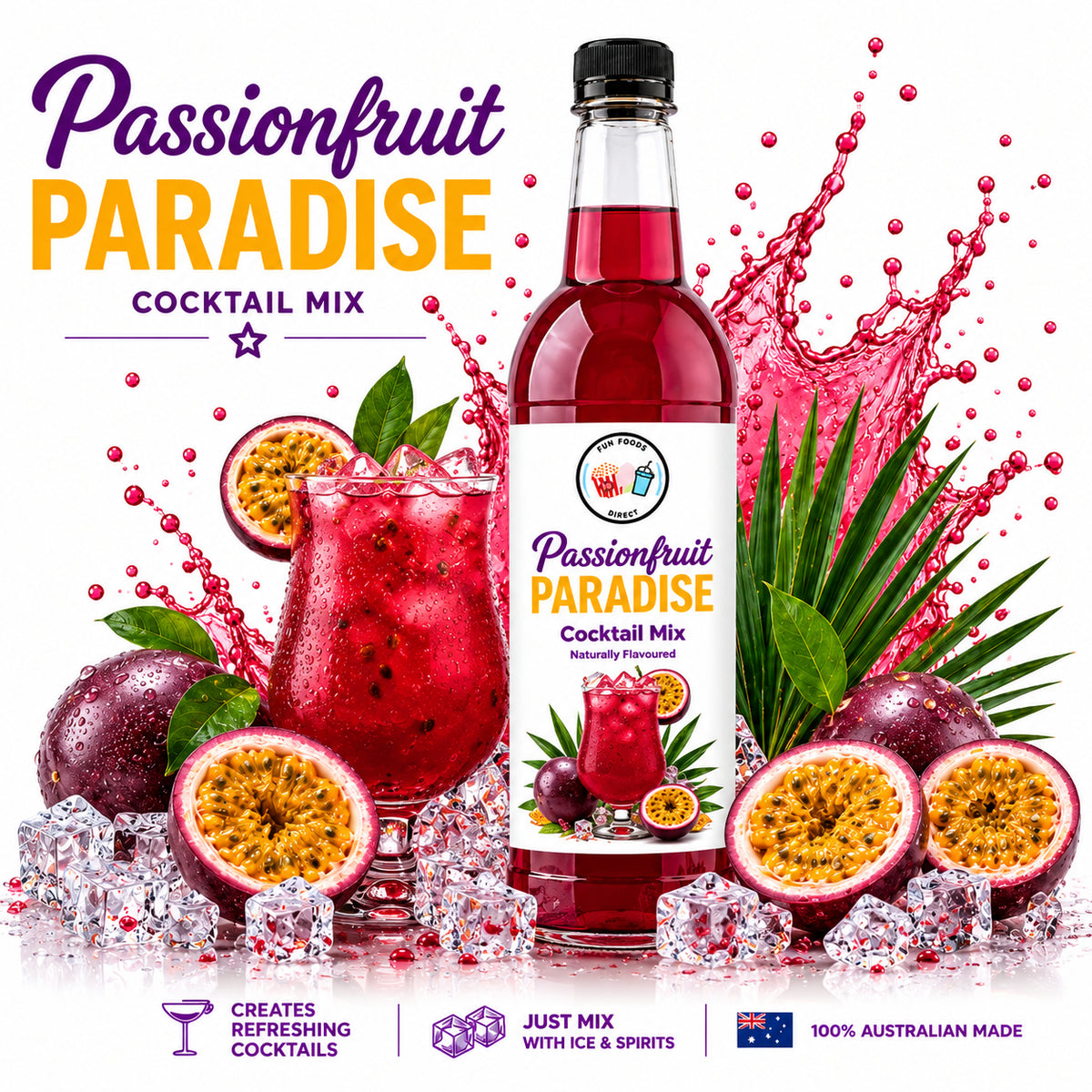
Passionfruit Paradise Premium Cocktail Mix
Passionfruit Paradise Premium Cocktail Mix is an 800 mL flavoured syrup base for bars, cafés, caterers and event menus. Passionfruit Paradise lends a fruity direction to soda drinks, mocktails and blended serves. Choose a mixer that suits the style you want, then adjust the syrup measure to taste. Start with a small glass and adjust the mix to suit your taste.
Ingredients
Water, Sugar, Dextrose, Food Acid (330), Flavours, Colour (123), Preservative (211).
These are the ingredients in the bottled syrup. Spirits, juice, soft drinks, coffee, fresh fruit, ice cream and garnishes are separate additions when used.
How to start a drink
Select a mixer or dessert ingredient, add a small measured amount of syrup and taste a trial portion. Record the amounts you like before preparing a larger batch. Start with a small pour, taste the complete drink and record the ratio that suits your glass.
Nutrition per 25 mL of syrup
The 800 mL bottle contains 32 nutrition servings of 25 mL each. These numbers describe the syrup, before mixers or other ingredients are added.
- Energy
- 402 kJ
- Protein
- <1 g
- Total fat
- 0 g
- Saturated fat
- 0 g
- Carbohydrate
- 22.3 g
- Sugars
- 22.3 g
- Sodium
- 12 mg
Use the ingredients and amounts of the completed drink when assessing a finished serve.
Develop a Passionfruit Paradise serve
Begin with a small glass of Passionfruit Paradise, using a mixer that suits the finished drink you want to serve. Measure the syrup separately, add ice and taste before deciding whether to add more mixer. Write down the result if it will be offered to guests.
Choose a mixer deliberately, taste the trial and write down the quantities before offering a repeatable serve. A different mixer or spirit produces a different drink, so treat each variation as a new trial rather than presenting one ratio as universal. Keep a note of glass size, liquid volume and any garnish.
Put the syrup measure, mixer, ice and garnish on a one-page staff recipe card. A defined method gives each bartender the same starting point and makes ingredient costing more useful. Without an established recipe measure, calculate bottle yield only after you have settled on a house pour.
Build a cocktail and a mocktail
Start with a syrup-and-mixer trial without alcohol. Once you are happy with that version, prepare a separate cocktail trial if you want one, adding the spirit deliberately and tasting the new balance. Do not assume that removing or adding alcohol will leave the volume and taste identical.
Give each finished drink a clear ingredient line. A guest should be able to tell which version has alcohol and which liquid or garnish was added. The syrup is one part of that recipe, while the other items are selected at preparation.
Name the cocktail and mocktail versions separately on the menu, and specify any spirit, juice, coffee, ice cream or garnish that goes into the finished serve. Write down the final quantities after testing so the same drink can be made again.
Test a frozen presentation
For a blended version, make one small trial with a separately chosen mixer and ice. Add the ice in stages and blend with equipment designed for it. Adjust the consistency in the test glass before committing to a larger group or a menu description.
The final texture depends on syrup quantity, mixer, ice, blender and any alcohol you choose to add. A product name can suggest a frozen-drink theme, but it does not establish a fixed dilution, yield or compatibility with every frozen-drink machine.
Note the amounts that worked, the number of glasses produced and how quickly the drink will be served. The tested recipe gives you a more useful guide to purchasing than an unmeasured splash of syrup.
What goes into the finished drink
The syrup ingredients list flavours but does not name passionfruit flesh or juice. Fresh passionfruit can be an addition if you include it in a finished recipe. The bottled concentrate provides the base; fresh additions become ingredients of your completed drink.
Passionfruit Paradise can be developed as a fruit-themed cocktail or mocktail, but the mixer and syrup measure can be chosen for your finished drink. Begin with one small measured syrup-and-mixer sample, then adjust to your chosen glass. A spoon of fresh passionfruit is an optional addition, not an individual ingredient identified in the concentrate. When a guest asks what is in the drink, the answer should include the particular mixer, spirit and fruit you added to the finished glass.
Choose a mixer deliberately, taste the trial and write down the quantities before offering a repeatable serve. If you choose another mixer, compare the result in a finished cold glass rather than judging a room-temperature sample. Carbonation, sweetness, acidity and the amount of ice can each affect how the drink tastes after several minutes.
For a garnish, choose something that suits the recipe you have tested and prepare it separately. A fruit slice, mint sprig, salted rim or dessert topping should only appear in a menu description when it will actually be served.
Choose a presentation that fits
The same bottle can support different presentation ideas, but each should have its own recipe. A drink over ice, a blended drink and an ice-cream-style treat have different liquid, ice and ingredient requirements. Decide which experience you want before choosing the glass and garnish.
When preparing drinks in hospitality service, begin with one finished sample. Take note of whether the glass has room for ice, whether the mixer stays lively through service and whether the drink is easy for another person to reproduce. If you change a component, taste again.
For event service, test the finished drink with the exact mixer and glassware you plan to stock, then train the team on that result. These small choices make the presentation more consistent than relying on a picture or a flavour name alone.
Turn a tasting into a repeatable recipe
For Passionfruit Paradise, begin with one small glass and write down the syrup volume you actually poured. Add your chosen mixer in stages, recording the total liquid and the amount of ice. Taste the glass at the moment you would normally serve it, then taste it again after a short time over ice to see whether dilution changes your preferred balance.
Make the second version on a fresh trial rather than repeatedly topping up the first one. That makes it easier to compare a soda drink, a juice drink or a blended presentation without losing track of the starting measures. The syrup ingredients list flavours but does not name passionfruit flesh or juice. Fresh passionfruit can be an addition if you include it in a finished recipe.
Once you settle on a version for guests, give it a name that reflects the ingredients actually used. Keep the no-alcohol and spirit-added versions on separate recipe cards, and buy the mixer, ice and garnish for the number of serves you expect.
Compare it with another cocktail base
Passionfruit Paradise sits alongside Piña Tropical Paradise, which has a measured pineapple-juice and white-rum suggestion. The two products can have different drink styles even when their syrup ingredients share a similar format, because the chosen mixer, spirit and method determine the completed glass.
If you are planning more than one option, put different preparations on the menu instead of repeating the same drink under two names. Pair a soda serve with a juice-based or coffee-style option where those recipes are available. Guests can then choose by serve, not just by the product name.
Choose the mixer and garnish for each flavour separately, then make a sample glass before serving a larger round. A garnish, spirit or mixer from another flavour's recipe should only be included after a separate test.
Portions and shopping quantities
The 800 mL bottle has 32 nutrition servings when measured at 25 mL of syrup. That figure is not a promise of 32 finished drinks. Choose your syrup measure through a small tasting before dividing the bottle into portions for an event.
If your own recipe ultimately uses 30 mL syrup, arithmetic gives 26 complete measures from 800 mL with 20 mL left before waste. If it uses another amount, the result will differ. Include any mixer, spirit, fruit, ice or dessert ingredient in the quantity plan.
Forecast the number of serves by style, then cost syrup, mixer, spirit, ice, cup or glass and garnish. Keep a margin for training pours, test glasses and waste. Recalculate the shopping list when your final recipe or glass size changes.
Set up a bar or café prep station
Put the syrup measure, mixer, ice and garnish on a one-page staff recipe card. A defined method gives each bartender the same starting point and makes ingredient costing more useful. Place glasses, ice and any garnish where they can be reached without interrupting the preparation.
Name the cocktail and mocktail versions separately on the menu, and specify any spirit, juice, coffee, ice cream or garnish that goes into the finished serve. A short ingredient line beside the recipe helps people distinguish the syrup from separately added spirits, juice, coffee and fresh garnishes.
Keep mixers chilled when the recipe calls for a cold serve, and assemble carbonated drinks close to serving. If several people make the drink, check the first few glasses against the same measure and method.
Understand the syrup's nutrition
The nutrition information is for a 25 mL serving of the syrup: 402 kJ energy, less than 1 g protein, 0 g total fat, 0 g saturated fat, 22.3 g carbohydrate, 22.3 g sugars and 12 mg sodium. The bottle lists 32 such servings.
Sugar and dextrose appear in the ingredient list. The syrup is not a sugar-free product. A mixed drink can contain additional energy and sugars from a spirit, juice, lemonade, ice cream or other mixer; the figures above describe the syrup alone.
When dietary information is needed for a menu, use the complete recipe and the specifications of every ingredient you actually add. Do not transfer a syrup-only number to a full cocktail, mocktail or milkshake.
Store and handle the syrup
Store the concentrated syrup at room temperature and refrigerate after opening. Close the bottle between uses and use a clean measure. Follow the date on the bottle supplied rather than using a fixed shelf-life estimate for every batch.
Keep fruit, juice, coffee, ice cream and any other additions under the storage conditions that apply to them. A prepared drink is a combination of ingredients, and the syrup's storage direction alone does not determine how long a completed drink may be kept.
Prepare chilled glasses when they will be served, especially if they contain ice or a carbonated mixer. This helps keep the result consistent from the first pour to the last.
Put it to work on a drinks menu
Train staff with a finished sample of Passionfruit Paradise and record the syrup, mixer, optional spirit, ice, glass and garnish. The same measurements support consistent customer service and a clearer cost per glass.
To distinguish this option from Piña Tropical Paradise, which has a measured pineapple-juice and white-rum suggestion, explain the actual preparation and mixer in the menu line. A guest benefits more from a useful description of the drink than a list of vague flavour promises.
When stock or a mixer brand changes, retest the completed serve and revise the recipe card if required. Keep the syrup's ingredient information separate from those of added products.
Questions about Passionfruit Paradise
What is this product?
Passionfruit Paradise Premium Cocktail Mix is an 800 mL flavoured syrup base for drinks. You combine it with other ingredients to make a finished cocktail, mocktail, blended drink or another tested presentation.
Does the bottle contain the spirit or mixer?
No spirit, chosen mixer or fresh garnish is listed as an individual syrup ingredient. Add those items only when making the completed drink, and describe the serve according to what you used.
How do I make a chilled drink?
Choose a mixer, start with a small measured syrup trial over ice and record a balance you like. Build a small test glass with your chosen mixer, taste, and adjust it before preparing more.
Can I make a mocktail?
Yes. Combine the syrup with a suitable mixer and ice, then taste. Choose the spirit and pour to suit your own finished recipe.
Can I blend it with ice?
Try a small blender portion with the syrup, your chosen liquid and ice. Add more ice gradually for the texture you want. Record the amounts before preparing a larger batch.
How many glasses can I make?
At a 30 mL syrup measure, 800 mL provides 26 full pours and leaves 20 mL before tasting or loss. The 32 servings in the nutrition information use 25 mL syrup each. Actual drink yield depends on your chosen recipe.
Is it sugar free?
No. The syrup lists sugar in its ingredients and 22.3 g sugars per 25 mL serving. Other ingredients in the completed drink can change its nutrition.
How should I store it?
Store the concentrated syrup at room temperature and refrigerate after opening. Keep the bottle closed and follow the storage needs of any ingredients you add.